
Main Courses
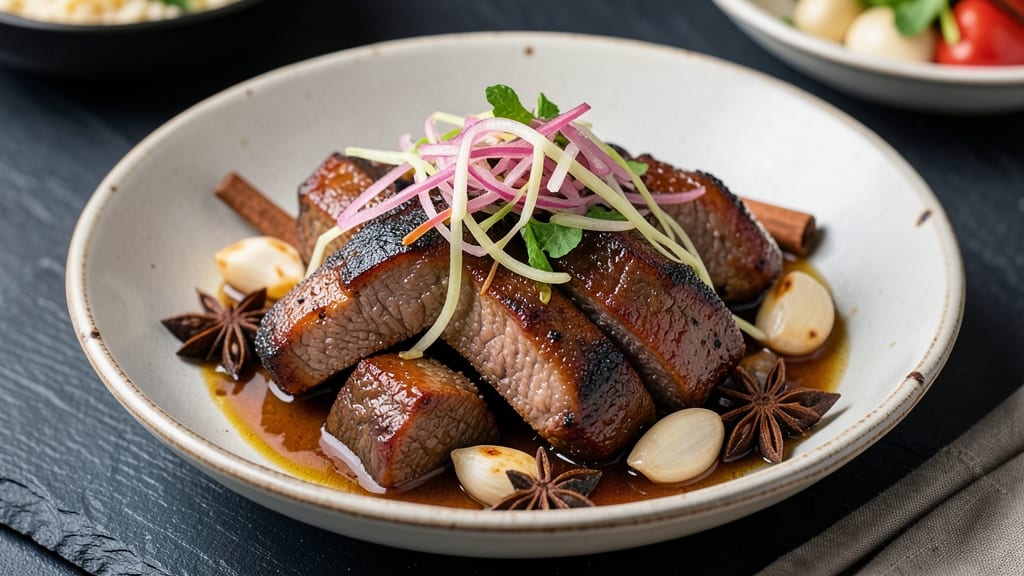
This slow-braised Asian beef shin recipe transforms tough, flavorful shank into melt-in-your-mouth perfection through a marinade and low-and-slow cooking process that builds rich, caramelized depth.
The secret lies in tenderizing the meat overnight while developing layers of umami through soy, ginger, and star anise—techniques rooted in traditional Chinese braising methods but simplified for home cooks.
What starts as a chewy cut becomes so tender it shreds easily, coated in a glossy, aromatic sauce that clings to every bite.
The beauty of this dish is its versatility—whether you're serving it over steamed rice as a comforting weeknight meal or presenting it at a dinner party, the deep, savory-sweet profile makes it equally at home in both settings.
The braising liquid reduces into a thick, velvety glaze that caramelizes beautifully, adding complexity without overpowering the natural beef flavor. This isn't just a recipe; it's a culinary transformation that turns an economical cut into something luxurious.
By the time you're done, you'll have a dish that's rich, tender, and packed with the kind of umami depth that makes every bite satisfying.
The aroma alone—warm spices, caramelized onions, and slow-cooked beef—will fill your kitchen, while the texture offers a perfect contrast between the silky meat and the slight crunch of garnished scallions. Serve with steamed jasmine rice and a side of quick-pickled vegetables to balance the richness.
Pair it with a crisp, dry white wine or a light lager to complement the dish's complexity without competing. The key to success is patience—the longer the braise, the more tender and flavorful the result.
This isn't a dish you can rush, but the payoff is worth every minute. Let's get started on creating something truly special.
Ingredients for asian beef shin
Four pounds of beef shin and a handful of aromatic ingredients transform into restaurant-worthy richness.
| Ingredient | Amount | Notes |
|---|---|---|
| Beef Shin (Shank) 🥩 | 2 lb | Bone-in, cut into 2-inch chunks |
| Yellow Onion 🧅 | 1 whole | Thickly sliced, charred for depth |
| Garlic Cloves 🧄 | 6 cloves | Smashed, not minced |
| Fresh Ginger 🌿 | 2 tbsp | Grated, skin-on for texture |
| Star Anise Pods 🌟 | 2 whole | Lightly crushed for aroma |
| Cinnamon Stick 🌿 | 1 whole | 2-inch length for warmth |
| Soy Sauce 🍶 | ½ cup | Dark soy preferred for color |
| Mirin 🍶 | ¼ cup | Sweet rice wine, not sub with sugar |
| Dry Sherry 🍷 | ¼ cup | Aged 3+ years for depth |
| Brown Sugar 🍚 | ¼ cup | Lightly packed, not granulated |
| Hoisin Sauce 🍶 | 1 tbsp | For umami richness |
| Sesame Oil 🫒 | 1 tsp | Toasted, added at end |
| Green Onions 🧅 | ¼ cup | Thinly sliced, for garnish |
| Jasmine Rice 🍚 | 1 ½ cups | Uncooked, long-grain preferred |
| Vegetable Oil 🫒 | 2 tbsp | High smoke point for searing |
The beef shin is your canvas here—bone-in shanks from Costco or Whole Foods have the best marbling. Look for pieces with visible fat cap; that's where the flavor hides. If you're buying whole shanks, ask the butcher to cut them into 2-inch chunks (they'll do it for free). Fresh ginger with skin on adds texture—peel only if you prefer silky smoothness. Star anise and cinnamon sticks aren't just spices; they're the aromatic backbone. Penzeys Spices carries whole pods that stay potent for months. The soy sauce should be dark soy—Lee Kum Kee brand is my go-to for that deep mahogany color.
No mirin? Equal parts dry sherry and sugar works, but you'll lose that delicate sweetness. Short on hoisin? Substitute with 1 tbsp extra soy sauce plus 1 tsp honey, though the fermented depth will differ. The sherry must be aged—3-year-old or better—cheap cooking sherry tastes like vinegar. For the onions, char them in a dry pan first (that smoky flavor is non-negotiable). The green onions? Save the tops for garnish—they're the only bright note cutting through the richness. And if you're feeling fancy, toast the sesame seeds separately for extra crunch.
This braise gets better the next day—3-4 days in the fridge lets flavors meld. Freeze portions for up to 3 months in airtight containers with sauce. For rice, cook it al dente (it'll finish steaming from the hot beef). Leftovers reheat beautifully—just add a splash of water or broth to loosen the sauce. Store the charred onions separately if you're prepping ahead; they keep their smoky punch for 5 days in the fridge.
Why You'll Love This Recipe
- Foolproof Simplicity: I swear by this one—just slice the shin, toss in onions, garlic, and ginger, then let the slow cooker do the work. No fancy knife skills or last-minute panics here.
- Deep Umami Magic: That star anise and ginger? It transforms tough shin into melt-in-your-mouth perfection with a rich, aromatic depth you won’t find in everyday beef dishes.
- Meal Prep MVP: Make a big batch on Sunday, and you’ve got flavorful leftovers for lunches all week. Honestly, my freezer’s always stocked with this—it reheats like a dream.
- Budget-Friendly Luxury: Beef shin is cheaper than steak but tastes like you splurged. Between us, this is how I feed my family well without breaking the bank. (And yes, even my picky teenager loves it.)
Step-by-step instructions for slow-braised Asian beef shin
Transform tough beef shin into melt-in-your-mouth perfection with this aromatic braising technique.
Sear the Beef Shin for Deep Flavor
Heat a heavy pot or Dutch oven over medium-high heat and add the 2 tablespoons vegetable oil. Working in batches if needed, sear the 2 lb beef shin in 2-inch chunks until deeply browned on all sides—this should take about 8-10 minutes total. The goal is to develop a rich, caramelized crust that will infuse the braising liquid with flavor.
Don't rush this step. You'll know it's ready when the beef releases easily from the pot and the surface is a deep, golden brown. Remove the seared beef and set it aside on a plate. The browned bits left in the pot will form the foundation of your sauce, so don't wipe them out.
Char the Onion and Build the Aromatic Base
In the same pot, add the 1 whole yellow onion, sliced thickly. Cook over medium heat for 5-6 minutes, stirring occasionally, until the onions develop deep char marks and caramelize. This step adds incredible depth of flavor to the dish.
Once the onions are charred, push them to one side of the pot and add the 6 smashed garlic cloves, 2 tablespoons grated fresh ginger (skin-on for texture), 2 lightly crushed star anise pods, and 1 cinnamon stick. Cook for 1-2 minutes until the garlic is fragrant and the spices are lightly toasted—this releases their essential oils and builds complex flavor.
Deglaze and Combine All Braising Ingredients
Pour in the 0.5 cup soy sauce, 0.25 cup mirin, 0.25 cup dry sherry, 0.25 cup brown sugar, and 1 tablespoon hoisin sauce. Use a wooden spoon to scrape up all the browned bits from the bottom of the pot—these contain concentrated flavor that will make your braising liquid rich and complex.
Return the beef shin to the pot, along with enough water to barely cover the meat (about 3-4 cups). Bring to a gentle simmer over medium heat, then reduce the heat to low and cover. The liquid should barely bubble—this slow cooking is what transforms tough beef into tender, shreddable perfection.
Braise Until Fork-Tender
Let the beef shin braise uncovered for 2.5-3 hours at a gentle simmer. You'll notice the liquid will reduce significantly as the meat releases its collagen and flavors into the sauce. Check occasionally and add a splash of water if the liquid gets too low—you want enough to keep the beef submerged.
After 2.5 hours, remove the lid and increase the heat to medium to reduce the sauce slightly. The beef is ready when it's fork-tender and easily shreds with two forks. If it's not quite there yet, continue braising for another 30 minutes. The sauce should coat the back of a spoon and have a glossy, syrupy consistency.
Finish and Serve Over Jasmine Rice
Remove the beef shin from the pot and transfer it to a cutting board. Discard the star anise pods and cinnamon stick. Skim off any excess fat from the braising liquid, then stir in the 1 teaspoon toasted sesame oil for a nutty finish. Taste and adjust seasoning if needed—you might want to add a touch more soy sauce for saltiness or a bit of sugar to balance acidity.
Shred the beef shin against the grain using two forks and return it to the pot to coat in the sauce. Serve immediately over 1.5 cups cooked jasmine rice, garnished with 0.25 cup thinly sliced green onions. The beef should be so tender it practically falls apart at the touch, with a rich, caramelized sauce that clings to every bite.
Pro Tips For Making Asian Beef Shin
- BLANCH THE SHIN FIRST: Toss your beef shin in boiling water for 2-3 minutes before braising—this loosens the collagen and cuts the cooking time by nearly 30 minutes. I learned this the hard way after staring at a pot of tough, undercooked shin for what felt like hours. Skip this, and you’ll regret it.
- PEEL GINGER IN THIN STRIPS: Instead of chopping fresh ginger into paste-like bits, peel it into long, paper-thin strips—about 1/8-inch thick. They infuse flavor without disappearing into the sauce, and you won’t waste half the jar in the process. (Yes, even if you’re impatient like me.)
- DON’T CROWD THE PAN: If your shin pieces are thick (over 1.5 inches), sear them in batches—two at a time max—so they get that deep, caramelized crust. I used to toss all four in at once, and they just steamed instead of browned. That’s when the dish starts tasting flat.
- USE WHOLE STAR ANISE: Crack the star anise pods with a knife before adding them—this releases their aroma without turning your sauce into a bitter mess. I was skeptical until I tried it; now I double-check every time. (And save the pods for future batches—they’re good for 2-3 uses.)
Storing and reheating your leftovers
Fridge Storage Tips
Let your braised beef shin cool completely before transferring to an airtight container—I use glass Pyrex with locking lids. Store in the fridge for up to 4 days, but trust me, the flavors deepen overnight as the sauce melds with the meat.
The charred onions can be kept separately in a sealed container for 5 days if prepping ahead. 💫
When reheating, add ¼ cup water or beef broth to the container and microwave on medium (50%) for 3-4 minutes, stirring halfway. The sauce will loosen beautifully, and the beef will stay tender.
For stovetop reheating, simmer gently for 10-12 minutes over low heat—never boil, or the sauce will separate.
Freezer Prep Guide
For long-term storage, freeze the beef shin in single-serving portions (about 1 cup per container). Use quart-sized freezer bags—they stack neatly and thaw faster than rigid containers. Leave 1 inch of headspace to prevent expansion cracks, and label with the date.
This braise freezes for 3 months without quality loss, though the texture becomes slightly more gelatinous after thawing. ❄️
To thaw, transfer the container to the fridge 24 hours before serving. For a quick thaw, use the microwave defrost setting (about 3-4 minutes), then finish reheating on the stovetop.
Pro tip: Add the frozen beef directly to a cold pot with fresh braising liquid (same ingredients) and simmer for 1.5 hours—the cold start prevents overcooking.
Sauce Preservation
The reduced braising sauce is the star—save it separately if you want to use it for other dishes. Store in a small glass jar in the fridge for 5 days or freeze for 2 months.
I often use it as a glaze for roasted vegetables or a dipping sauce for dumplings. The sauce thickens when chilled, so add 1-2 tablespoons water when reheating to restore its glossy consistency. 🍶
If you're making extra sauce, reduce it further by simmering uncovered for 10-15 minutes until it reaches a syrup-like thickness. This concentrated version keeps for 3 months in the freezer and makes an incredible marinade for grilled meats or a drizzle for noodles.
Just thaw overnight in the fridge before using.
Rice Pairing Storage
Cook your jasmine rice fresh the day you serve the beef shin—it pairs best when warm and slightly sticky. However, if you're prepping ahead, store cooked rice in the fridge for 3 days in an airtight container.
Reheat rice separately by steaming for 3-4 minutes or microwaving with a damp paper towel. The contrast of warm rice and reheated beef is pure comfort. 🍚
For freezer-friendly rice, spread freshly cooked rice on a tray to cool, then transfer to a freezer bag with 1 teaspoon oil to prevent sticking. Thaw overnight in the fridge before reheating.
I like to mix a pinch of toasted sesame seeds into the rice when reheating for extra aroma—it’s a tiny effort that makes a big difference.
Nutrition facts
Frequently asked questions
Can I substitute beef shin with another cut of beef?
While beef shin is ideal for its collagen-rich texture, you can use chuck roast or brisket as substitutes. Cut them into similar 2-inch chunks and increase braising time by 30-45 minutes since these cuts have less connective tissue. Avoid lean cuts like sirloin—they won't develop the same tender, melt-in-your-mouth quality.
How do I know when the beef shin is fully tender?
The beef is ready when it shreds easily with two forks and has no resistance. Insert a fork into the thickest piece—if it slides through like butter, it's perfect. The sauce should also coat the back of a spoon with a glossy, syrupy consistency. If it's still slightly chewy after 3 hours, add ½ cup water and simmer uncovered for another 30 minutes.
What's the best way to reheat this dish without drying it out?
Add ¼ cup water or beef broth to the container and microwave on medium (50%) for 3-4 minutes, stirring halfway. For stovetop reheating, simmer gently over low heat for 10-12 minutes—never boil, or the sauce will separate. The key is gentle heat and moisture to restore the sauce's velvety texture.
Can I make this recipe in a slow cooker? Sear the beef shin first, then transfer everything (including the charred onions and spices) to your slow cooker. Add 3 cups water and cook on low for 8 hours or high for 5-6 hours. The slow cooker's gentle heat works perfectly for breaking down collagen. Just
What are the best sides to serve with this dish?
This rich braise pairs beautifully with steamed jasmine rice, quick-pickled vegetables (like cucumbers or radishes), and stir-fried bok choy. For a complete meal, add mandarin orange slices to cut through the richness or serve with steamed dumplings for extra texture. The acidity from pickled veggies balances the deep umami flavors perfectly.