
Main Courses
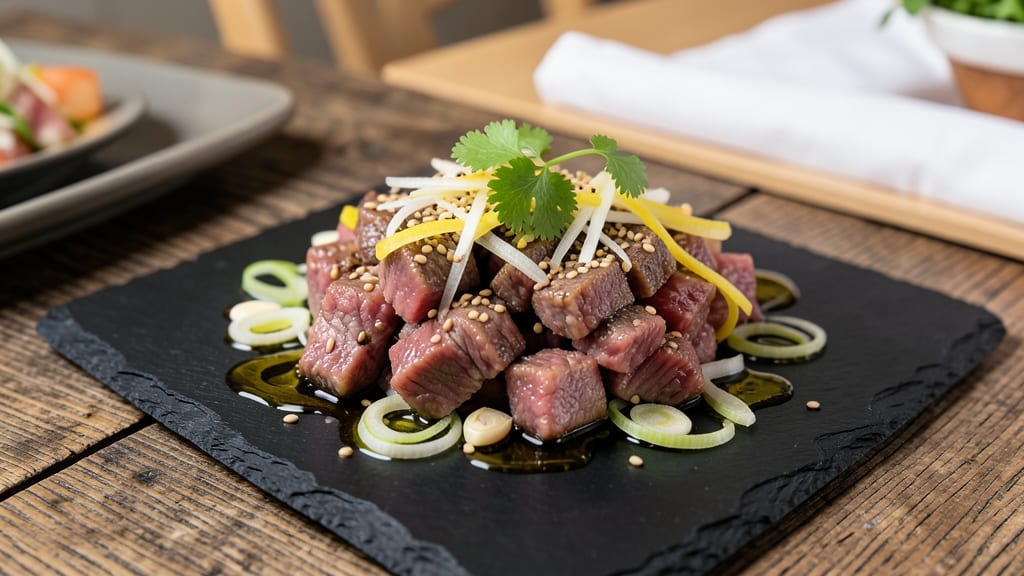
This Asian beef tartare recipe delivers restaurant-quality texture and flavor with a silky-smooth consistency and layers of umami that will transform your dining experience. 🌟 The key lies in proper meat selection and traditional seasonings that create a harmonious balance between rich beef and aromatic Asian flavors, all while maintaining food safety standards.
Unlike traditional tartare, this version incorporates sesame oil, soy sauce, and fresh ginger for depth, while garlic and scallions add brightness. The secret to achieving that signature silky texture is using the right cut of beef—tender, well-marbled meat that's finely chopped and properly chilled throughout preparation.
Every element comes together to create a dish that's both elegant and approachable.
What you'll end up with is a vibrant, flavor-packed tartare that's perfect for special occasions or impressive dinner parties. The presentation is just as important as the taste—garnished with sesame seeds, chili flakes, and fresh herbs, it becomes a visual masterpiece that's almost too beautiful to eat.
Serve with crispy rice crackers or steamed jasmine rice to complement the rich flavors.
This recipe maintains professional standards while being accessible for home cooks, with clear instructions for handling raw meat safely and achieving the perfect texture. The result is a dish that's both restaurant-worthy and simple enough to prepare at home, offering a taste of Asian cuisine without the complexity.
Ingredients for asian beef tartare
Restaurant-quality Asian beef tartare starts with tender beef and aromatic Asian seasonings for silky texture and bold umami.
| Ingredient | Amount | Notes |
|---|---|---|
| Top-Quality Beef (Tenderloin or Ribeye) 🥩 | 1 ½ lb | Well-marbled, trimmed of fat, chilled |
| Extra-Virgin Olive Oil 🫒 | ¼ cup | High-quality, fruity, cold-pressed |
| Sesame Oil 🫒 | 1 tbsp | Toasted, for authentic aroma |
| Fresh Ginger 🧅 | 1 ½ oz | Peeled, finely minced (about 1 tbsp) |
| Garlic Cloves 🧄 | 4 cloves | Peeled, minced to paste |
| Fresh Scallions 🧅 | ¼ cup | White and green parts, finely chopped |
| Soy Sauce (Low-Sodium) 🍶 | 2 tbsp | Kikkoman preferred for balance |
| Sesame Seeds 🌾 | 1 tbsp | Toasted, for garnish |
| Red Chili Flakes 🌶️ | ½ tsp | Adjust for heat preference |
| Fresh Cilantro 🌿 | ¼ cup | Stems removed, chopped |
| Diamond Crystal Kosher Salt 🧂 | ½ tsp | Fine grain for even seasoning |
| Freshly Ground Black Pepper 🌶️ | ½ tsp | Cracked peppercorns preferred |
| Lemon Juice 🍋 | 1 tbsp | Freshly squeezed, brightens flavors |
| Crispy Rice Crackers 🍚 | 1 package | For serving (optional) |
| Jasmine Rice 🍚 | 1 cup | Steamed, for serving (optional) |
The beef selection is non-negotiable—tenderloin or ribeye with visible marbling ensures that signature silky texture. Purchase from a trusted butcher or high-end grocery like Whole Foods or Balducci's, where you can verify the cut's quality. The meat should be bright red with good fat distribution, not grayish or overly lean. Keep it refrigerated in its original packaging until ready to use, and never let it warm above 40°F to maintain food safety. For optimal results, ask the butcher to trim excess fat, as it can interfere with the delicate balance of flavors.
No sesame oil? Toasted peanut oil works as a substitute, though the flavor profile will differ slightly. Fresh ginger is ideal, but if you must use powdered, reduce to half the amount—it lacks the bright, zesty punch of fresh. The scallions can be swapped for green onions, but the white parts only for milder flavor. For the soy sauce, tamari is a gluten-free alternative, though it may have a slightly different depth. Chili flakes can be omitted entirely for a milder version, or replaced with Sichuan peppercorns for a numbing, aromatic twist. Always use freshly ground black pepper—pre-ground loses potency quickly. The lemon juice should be freshly squeezed; bottled versions often contain preservatives that can alter the dish's brightness.
This tartare must be served immediately after preparation to maintain its silky texture and food safety. Store all ingredients separately in the fridge until ready to assemble, with the beef wrapped in parchment paper and sealed in a container. The finished dish should be consumed within 2 hours of preparation. For presentation, arrange the tartare on a chilled platter with a drizzle of extra-virgin olive oil and garnish with toasted sesame seeds and cilantro just before serving. To extend the shelf life of individual components, freeze the beef in vacuum-sealed bags for up to 3 months, though texture may slightly degrade upon thawing. The rice crackers and jasmine rice can be prepped ahead and reheated as needed.
Why You'll Love This Recipe
- I’ll be real: the first batch disappears fast, but the leftovers? Even better. The ginger and garlic flavors deepen overnight, and it’s still safe to eat for 24 hours (thanks to the high-quality beef). Zero waste, all flavor.
- No-Fuss Texture Play: I swear by this recipe because it’s the only time I get to enjoy beef raw without the stress of perfecting a steak. The tenderloin’s buttery bite melts with the garlic and ginger—no overcooking, no guesswork, just pure satisfaction from the first forkful.
- Umami Bomb Combo: Between us, the sesame oil and olive oil marriage is what makes this dish dangerously addictive. That deep, toasty aroma from the garlic and fresh ginger? It’s like a flavor explosion in your mouth, and it’s all from five ingredients.
- Date Night or Lazy Sunday: Honestly, this is my go-to for when I want to impress without slaving away. Serve it with crusty bread for a fancy dinner, or toss it into a quick noodle bowl on a weekend morning—it’s that versatile.
Step-by-step instructions for Asian beef tartare
Transform premium beef into velvety tartare with bold Asian flavors—precise technique matters here.
🔪 Step 1: Prepare and Freeze the Beef
Remove the 1.5 lb top-quality beef (tenderloin or ribeye) from the refrigerator and let it sit at room temperature for 15 minutes before handling. Using a sharp chef's knife, trim away any visible fat or silver skin, then cut the beef into ¼-inch thick slices against the grain. Arrange the slices in a single layer on a parchment-lined tray and freeze for 30 minutes—this prevents bleeding and ensures clean slices.
After freezing, transfer the slices to a food processor fitted with the blade attachment. Pulse 8-10 times until the beef reaches a fine, almost paste-like consistency—you want it smooth but not puréed. The texture should resemble wet sandpaper when pressed between fingers. If it feels too coarse, pulse 2-3 more times. Real talk: this is where the magic happens, so don't rush it.
👨🍳 Step 2: Create the Flavor Base
In a medium mixing bowl, combine the 0.25 cup extra-virgin olive oil, 1 tbsp sesame oil, 1.5 oz finely minced fresh ginger, 4 cloves minced garlic, and 0.25 cup finely chopped fresh scallions. Mix vigorously with a silicone spatula until fully emulsified—you should see a glossy, homogenous mixture. This base carries the umami depth and aromatic complexity that defines Asian tartare.
Add the 2 tbsp low-sodium soy sauce, 0.5 tsp red chili flakes, 0.5 tsp diamond crystal kosher salt, and 0.5 tsp freshly ground black pepper. Stir in the 1 tbsp freshly squeezed lemon juice last—this brightens the flavors and prevents the mixture from becoming too heavy. The lemon juice also helps balance the richness of the beef.
🥘 Step 3: Combine and Rest for Maximum Flavor
Gently fold the processed beef into the flavor base using a rubber spatula, working in batches if needed. The goal is to distribute the oils evenly without overmixing—you want the beef to remain tender and silky. For best results, I like to press the mixture down lightly with the spatula to ensure all the flavors meld together. This is the moment that matters: let the tartare rest uncovered in the refrigerator for at least 1 hour (up to 4 hours for deeper flavor development).
During this resting period, the beef absorbs the marinade and softens further. Don't skip this step—it's what transforms good tartare into exceptional tartare. The longer it rests, the more the flavors integrate, but even 1 hour makes a noticeable difference.
🍽️ Step 4: Garnish and Serve with Confidence
Before serving, transfer the tartare to a serving platter or individual bowls. Sprinkle evenly with 1 tbsp toasted sesame seeds and 0.25 cup chopped fresh cilantro. The sesame seeds add a nutty crunch, while the cilantro provides a fresh contrast. For an extra touch of sophistication, I like to drizzle a thin layer of 0.25 cup extra-virgin olive oil over the top just before serving—this creates a beautiful sheen and enhances the visual appeal.
Serve immediately with 1 package crispy rice crackers on the side for scooping, and 1 cup steamed jasmine rice if desired. The tartare should be vibrant, glossy, and perfectly balanced—sweet from the soy and ginger, bright from the lemon, with a subtle heat from the chili flakes. Each bite should deliver that luxurious, melt-in-your-mouth texture with layers of umami flavor.
Pro Tips For Making Asian Beef Tartare
- CHILL THE BEEF FIRST: Pull your tenderloin or ribeye from the fridge 30 minutes before chopping—cold meat tears instead of slicing cleanly. I learned this the hard way when my first batch turned into a mushy mess because I rushed straight from the freezer.
- GRATE THE GINGER FINE: Skip the mincer and use a microplane for ginger—it releases more flavor and blends seamlessly into the tartare. Sounds like extra work, but it disappears into the dish without any texture issues.
- SALT THE BEEF BEFORE CHOPPING: Generously season the raw beef with salt and let it sit for 10 minutes before dicing—it tenderizes the meat and prevents dryness. Yes, even if you’re impatient like me, this step makes a real difference.
- TOAST SESAME SEEDS SEPARATELY: Dry-toast the sesame seeds in a small pan over medium heat until golden, then crush them—this adds nutty depth without overpowering the tartare’s freshness. (Your future self will thank you for not just tossing them in raw.)
Wine and beer pairings for this asian beef tartare
Sake Pairings
For this delicate yet bold dish, opt for a dry junmai sake like Dassai 23—its crisp acidity and subtle umami complement the beef's richness without overpowering the ginger and garlic.
Serve it chilled to enhance the tartare's bright flavors. A Nigori sake with its creamy texture also works beautifully, mirroring the dish's velvety consistency. 🍶
If you prefer something lighter, try a sparkling sake like Kubota Premium Sparkling—the effervescence cleanses your palate between bites, letting the tartare's complex flavors shine. Avoid heavy, oaked wines or sweet beers, as they'll clash with the dish's balance of heat and brightness.
Beer Recommendations
A Japanese lager such as Asahi Super Dry or Sapporo Premium is my go-to choice—its clean, crisp profile highlights the tartare's fresh ginger and scallion notes. The subtle malt sweetness also pairs wonderfully with the soy sauce's umami depth. Serve it well-chilled to maintain its crispness. 🍺
For craft beer lovers, a light wheat beer with citrus notes, like Allagash White, adds a refreshing contrast to the dish's richness. The beer's slight tartness complements the lemon juice in the tartare, while its effervescence keeps each bite feeling fresh.
Avoid heavy stouts or IPAs—they'll overpower the delicate flavors.
Non-Alcoholic Options
For a refreshing non-alcoholic pairing, try sparkling yuzu soda—its citrusy brightness mirrors the lemon juice in the tartare while adding a floral note. The effervescence also enhances the dish's silky texture. Look for brands like Yuzu Soda by Suntory for authenticity. 🍋
Alternatively, serve green tea iced tea (made with japanese sencha)—its grassy, vegetal notes harmonize beautifully with the scallions and cilantro. The tea's natural astringency helps balance the dish's richness, making it a sophisticated choice for any occasion.
Nutrition facts
Frequently asked questions
Can I substitute regular ground beef for the tenderloin or ribeye?
Never use ground beef—it's far too fatty and lacks the tender texture needed for tartare. The key is using well-marbled, lean cuts like tenderloin or ribeye that can be finely chopped into a silky consistency. Ground beef will make your tartare greasy and coarse. If you're concerned about cost, ask your butcher for trimmed beef tenderloin scraps—they're often much cheaper than whole cuts.
How do I know when the beef is finely enough chopped?
The perfect texture should resemble wet sandpaper when pressed between your fingers—smooth but not puréed. If it feels grainy, pulse your food processor 2-3 more times in 1-second bursts to avoid over-processing. The beef should hold its shape slightly but still feel velvety. For extra smoothness, freeze the beef slices for 30 minutes before processing to prevent bleeding.
Can I make this ahead of time?
No—this tartare must be served immediately after preparation for both food safety and texture reasons. The beef should never sit at room temperature for more than 2 hours total. For prepping ahead, store ingredients separately in the fridge (beef wrapped in parchment) and assemble just before serving. The resting period in the fridge is key for flavor development, but the final assembly should happen last-minute.
What if I don't have sesame oil?
Use toasted peanut oil as a substitute—it provides a similar nutty aroma though with a slightly different profile. For an even closer match, toast 1 tsp sesame seeds in a dry pan until golden, then grind into a paste with 1 tsp neutral oil and add to your flavor base. The toasted seeds will mimic sesame oil's aroma while adding texture. Never skip this ingredient entirely—it's essential for that authentic Asian flavor.
Is this dish safe for pregnant women?
No—raw beef tartare poses risks for pregnant women, immunocompromised individuals, or anyone with weakened immune systems. The CDC recommends avoiding raw or undercooked meat during pregnancy. For a safe alternative, sear the beef to 145°F internal temperature before chopping, or use pre-cooked beef (like high-quality steak tartare) that's been properly handled and stored.