
Main Courses
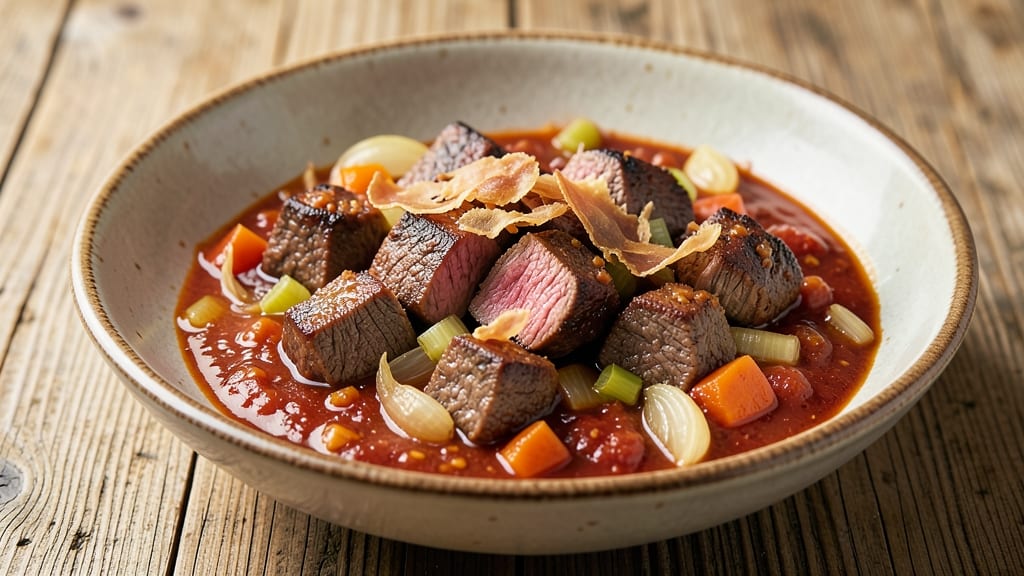
This authentic beef Bolognese recipe brings the rich, slow-simmered flavors of Emilia-Romagna to your kitchen with a technique rooted in tradition. The secret lies in braising chuck roast until it's fork-tender, then building layers of umami through wine reduction and a touch of milk for depth. Unlike quicker versions, this sauce develops complex flavor over hours—not minutes—creating a sauce that clings to every strand of al dente pasta.
The foundation starts with a soffritto of celery, carrot, and onion cooked low and slow, forming the aromatic base before adding ground beef and pancetta for fat and texture. A splash of red wine deglazes the pot, while milk mellows the acidity and creates that signature velvety finish.
What sets this apart is the patience: no shortcuts, just time and technique to deliver restaurant-quality results at home.
By the time you twirl that first forkful, you'll taste the difference—deep, meaty richness balanced by bright tomato and herbaceous notes. The sauce should coat the pasta completely, leaving just a whisper of al dente bite.
Serve with freshly grated Parmigiano-Reggiano and a sprinkle of fresh basil to elevate it from weeknight dinner to Italian trattoria experience.
This recipe scales beautifully for gatherings, and leftovers taste even better the next day as flavors meld further. The key is maintaining that slow simmer—never rushing the process. Let's create the real deal, not just another tomato sauce with beef in it.
Ingredients for authentic beef bolognese
Sixteen ingredients, hours of simmering, and the richest beef Bolognese you'll ever make.
| Ingredient | Amount | Notes |
|---|---|---|
| Chuck Roast 🥩 | 2 lb | Pre-cubed, 1-inch pieces |
| Pancetta 🥓 | ½ lb | Diced, not bacon |
| Celery Stalks 🧅 | 3 whole | Diced, leafy parts trimmed |
| Carrots 🥕 | 2 whole | Diced, peeled if preferred |
| Yellow Onion 🧅 | 1 whole | Diced, medium size |
| Garlic Cloves 🧄 | 4 cloves | Minced, fresh preferred |
| Tomato Paste 🍅 | 1 tbsp | High quality, no sugar added |
| Dry Red Wine 🍷 | ½ cup | Bold, like Cabernet Sauvignon |
| Whole Milk 🥛 | ¼ cup | Full-fat for creaminess |
| Canned Crushed Tomatoes 🍅 | 2 cups | San Marzano preferred |
| Beef Broth 💧 | 1 ½ cups | Homemade or high-quality |
| Fresh Basil Leaves 🌿 | ¼ cup | Chopped, for finishing |
| Parmigiano-Reggiano 🧀 | ½ cup | Freshly grated, aged |
| Extra-Virgin Olive Oil 🫒 | ¼ cup | For sautéing soffritto |
| Salt 🧂 | 1 ½ tsp | Kosher or sea salt |
| Ground Black Pepper 🌶️ | ½ tsp | Freshly cracked |
The chuck roast is non-negotiable—it breaks down beautifully into tender pieces. Look for well-marbled cuts at your local butcher or the meat department of Whole Foods or Trader Joe's. Pre-cubing saves time, but if you're ambitious, ask the butcher to do it for you. Pancetta adds depth that bacon can't match—avoid the smoked variety unless you want a different flavor profile. For the soffritto, organic celery and carrots from the produce section will have more flavor, but regular store-brand works fine. The key is to dice everything uniformly—about 1/4-inch pieces—for even cooking.
No red wine? Dry sherry or beef broth with a splash of balsamic works in a pinch, but wine is worth hunting down. The milk might seem odd, but it's essential for that signature velvety texture—whole milk is non-negotiable here. For tomatoes, San Marzano cans are the gold standard, but any high-quality crushed tomatoes will do. Fresh basil is ideal, but dried oregano at half the amount won't ruin the dish. The Parmigiano-Reggiano should be freshly grated—pre-grated gets clumpy and lacks flavor. If you're short on time, buy a wedge at the deli counter and grate it yourself.
This sauce tastes even better the next day as flavors meld. Store in an airtight container in the fridge for up to 5 days or freeze for 3 months. For gatherings, double the recipe—it reheats beautifully. The pasta should be al dente; toss with a splash of pasta water to help the sauce cling. Always finish with fresh basil and Parmigiano-Reggiano—this is where the magic happens. Leftovers make fantastic lunches or sandwiches the next day.
Why You'll Love This Recipe
- One-Pot Magic: Honestly, the only chopping I do is dicing pancetta and mirepoix—celery, carrots, onion—then toss it all in one pot. That chuck roast practically melts down while you stir, no fancy techniques required.
- Deep, Savory Soul: Between us, the pancetta renders into crispy bits that cling to the beef like little flavor bombs, while the slow simmer lets the chuck roast turn ridiculously tender. That’s the kind of rich, meaty taste that makes you forget to breathe.
- Weeknight to Dinner Party: I’ve served this over spaghetti for my exhausted self on a Tuesday, then again for a crowd with crusty bread and a simple arugula salad. Same recipe, zero guilt—just adjust the sauce quantity.
- Budget-Friendly Leftovers: A 3-pound chuck roast feeds my family for days, and the sauce only gets better after reheating. Freeze half for lazy Mondays, or stretch it into stuffed shells—this is my wallet’s best friend.
Step-by-step instructions for authentic beef Bolognese
Here's how to craft a rich, slow-simmered Bolognese with deep umami flavor and perfect texture.
Build the Soffritto Foundation
Heat the 0.25 cup extra-virgin olive oil in a heavy Dutch oven over medium-low heat. Add the 0.5 lb diced pancetta and cook for 5-7 minutes until the fat renders and the pancetta becomes golden and crisp. Remove the pancetta with a slotted spoon and set aside, leaving the rendered fat in the pot.
In the same pot, add the 1 whole diced yellow onion, 3 whole diced celery stalks, and 2 whole diced carrots. Cook for 8-10 minutes, stirring occasionally, until the vegetables soften and the onion becomes translucent. This slow cooking process develops the base flavors that will carry through the entire dish.
Add the 4 minced garlic cloves and cook for 30 seconds until fragrant. Here's the thing—don't let the garlic brown or it will turn bitter. Immediately add the 1 tbsp tomato paste and stir to coat the vegetables completely. Cook for 2 minutes until the tomato paste darkens slightly and releases its rich, concentrated flavor.
Brown the Beef and Deglaze
Working in batches, add the 2 lb pre-cubed chuck roast to the pot, making sure not to overcrowd. Brown the beef on all sides over medium-high heat for 5-7 minutes total. This step is crucial for developing the meat's deep, caramelized flavor. If the pan gets too crowded, work in smaller batches to ensure proper browning.
Once the beef is browned, pour in the 0.5 cup dry red wine and scrape up all the browned bits from the bottom of the pot. This deglazing step captures all the concentrated flavors that would otherwise be lost. Let the wine simmer for 3-4 minutes until it reduces by half, intensifying its flavor profile.
Return the reserved pancetta to the pot and stir to combine. Add the 2 cups canned crushed tomatoes and 1.5 cups beef broth, stirring well to incorporate all the ingredients. Bring the mixture to a gentle simmer, then reduce heat to low to maintain a steady, gentle bubble.
Slow-Simmer for Deep Flavor Development
Cover the pot and let the Bolognese simmer for 2.5 to 3 hours, stirring occasionally. This long, slow cooking time is what transforms simple ingredients into a rich, complex sauce. The beef should become fork-tender, and the sauce should thicken naturally as it reduces.
After 2 hours, check the sauce consistency. If it's too thick, add 2-3 tablespoons of water or broth to loosen it. The sauce should coat the back of a spoon but still be saucy enough to cling to pasta. I know it seems like a long time, but patience is key here—rushing will result in a tough, dry Bolognese.
About 30 minutes before the end of cooking, stir in the 0.25 cup whole milk. This addition adds richness and balances the acidity of the tomatoes. The milk will blend seamlessly into the sauce, creating a velvety texture that's characteristic of authentic Bolognese.
Finish with Fresh Herbs and Seasoning
Remove the pot from heat and let the Bolognese rest for 10 minutes. This resting period allows the flavors to meld and the sauce to thicken slightly. Stir in the 0.25 cup chopped fresh basil leaves and 0.5 cup freshly grated Parmigiano-Reggiano, reserving some for serving. Taste and adjust seasoning with salt and ground black pepper as needed.
For the best results, the Bolognese should be served immediately over al dente pasta. The sauce should be rich, slightly thick, and cling beautifully to each strand of pasta. If you need to reheat leftovers, do so gently on the stovetop with a splash of broth or water to prevent the sauce from becoming too thick.
Serve with Perfectly Al Dente Pasta
Cook your choice of pasta (traditionally tagliatelle or pappardelle) 1 minute less than package instructions suggest. Reserve 1 cup of pasta water before draining. Toss the drained pasta with the Bolognese sauce, adding pasta water as needed to reach your desired consistency.
Divide the pasta among serving plates and top each portion with additional freshly grated Parmigiano-Reggiano. The finished dish should have a deep, complex flavor with layers of umami from the pancetta and beef, acidity from the tomatoes, and richness from the milk and cheese. Serve immediately while the pasta is still hot and the sauce is at its peak.
Pro Tips For Making Authentic Beef Bolognese
- CRUSH THE PANCETTA: Cook the pancetta until it’s golden and crispy—about 8-10 minutes on medium heat. I learned this the hard way: skipping crispiness means flavor gets lost in the sauce later. Use a wide skillet so it doesn’t steam; you want fat sizzling, not swimming.
- SWEAT, DON’T BROWN: When cooking onions, celery, and carrots, keep the heat low and cover the pan for the first 5 minutes. This sweats out moisture instead of burning them—burnt veggies turn bitter, and that ruins the base. Stir occasionally, but don’t rush it.
- BREAK THE CHUCK ROAST: Cut the chuck roast into 1-inch chunks before searing. Yes, it’s messy, but it cooks faster and more evenly. I used to sear whole slabs, thinking it’d caramelize better—turns out, small pieces absorb the pancetta fat and stay juicy.
- SIMMER, DON’T BOIL: After adding tomatoes, wine, and broth, reduce heat to the lowest setting—you’re aiming for a gentle simmer, not a rolling boil. I used to walk away and come back to a watery mess; now I keep it at a whisper and let it work its magic for 2+ hours.
Storing and reheating your authentic beef bolognese
Refrigerator Magic
Your Bolognese actually gets better overnight—trust me! Let it cool completely, then transfer to an airtight glass container (I love Pyrex with snap-on lids) and refrigerate for up to 5 days. The flavors meld beautifully, and the texture becomes even more velvety. Just
Freezer-Friendly Tips
For long-term storage, freeze your Bolognese in quart-sized freezer bags (leave 1-inch headspace for expansion). It keeps for 3 months without losing quality. When ready to use, thaw overnight in the fridge, then reheat gently on the stove. Pro tip: Portion into individual servings before freezing for easy meals. ❄️
Stovetop Reheating
This is my preferred method—it keeps the sauce luscious. Warm your Bolognese in a heavy pot over low heat, stirring occasionally. Add 2-3 tablespoons of water or beef broth if it thickens too much.
The goal is to reach 165°F internal temperature—just enough to heat through without breaking the sauce. Taste and adjust seasoning after reheating. 🔥
Microwave Shortcuts
For quick lunches, microwave individual portions in a microwave-safe bowl covered with a damp paper towel. Heat on 50% power for 2-3 minutes, stir, then continue in 30-second intervals until hot.
The damp towel prevents drying out. I often add a splash of milk to restore that creamy texture. ✨
Pasta Pairing Reminder
When reheating for pasta, cook fresh tagliatelle or pappardelle (al dente!) and toss with the warmed sauce. Reserve ½ cup pasta water to help the sauce cling perfectly. The ratio should be 1 cup sauce per 2 ounces dry pasta—this ensures every bite is saucy and satisfying. 🍝
Leftover Reinventions
Transform leftovers into Bolognese-stuffed manicotti or lasagna layers. For sandwiches, pile it on fresh ciabatta with a sprinkle of Parmigiano-Reggiano. The sauce's depth makes it perfect for breakfast hash too—just add diced potatoes and fry until crispy. 💡
Nutrition facts
Frequently asked questions
Why does authentic Bolognese use chuck roast instead of ground beef?
The chuck roast is key for its rich, beefy flavor and tender texture when slow-cooked. Ground beef would make the sauce too greasy and lack depth. The long simmering breaks down the connective tissue, creating melt-in-your-mouth pieces that build layers of umami as they cook.
Can I make Bolognese without wine? What's the best substitute?
Yes! Use ½ cup beef broth + 1 tablespoon balsamic vinegar for depth, or dry sherry if you prefer a fruity note. The wine's purpose is to deglaze and add acidity—just ensure you're balancing flavors with a splash of milk or extra tomato paste. The sauce will still be rich, just with a slightly different profile.
What's the secret to getting that creamy texture without making it too thick?
The milk is your secret weapon—it adds richness while balancing acidity. For texture, simmer uncovered for the last 15-20 minutes to reduce naturally. If it gets too thick, add 1-2 tablespoons of water or broth while reheating. The sauce should coat the back of a spoon but still cling to pasta.
What pasta works best with Bolognese, and why?
Traditionally, tagliatelle or pappardelle (wide, flat noodles) are ideal—they cradle the sauce beautifully. Ribbon-shaped pasta also helps prevent the sauce from sliding off. For extra grip, toss with ½ cup pasta water when combining. Avoid thin noodles like spaghetti—they'll break under the sauce's weight.
My Bolognese turned out too acidic—how can I fix it?
Add a pinch of sugar to balance the acidity, or stir in 1-2 tablespoons of milk or cream to mellow the tomatoes. If reheating, simmer with a small pat of butter to add richness. For future batches, reduce the crushed tomatoes slightly or add a splash of milk earlier in cooking.