
Main Courses
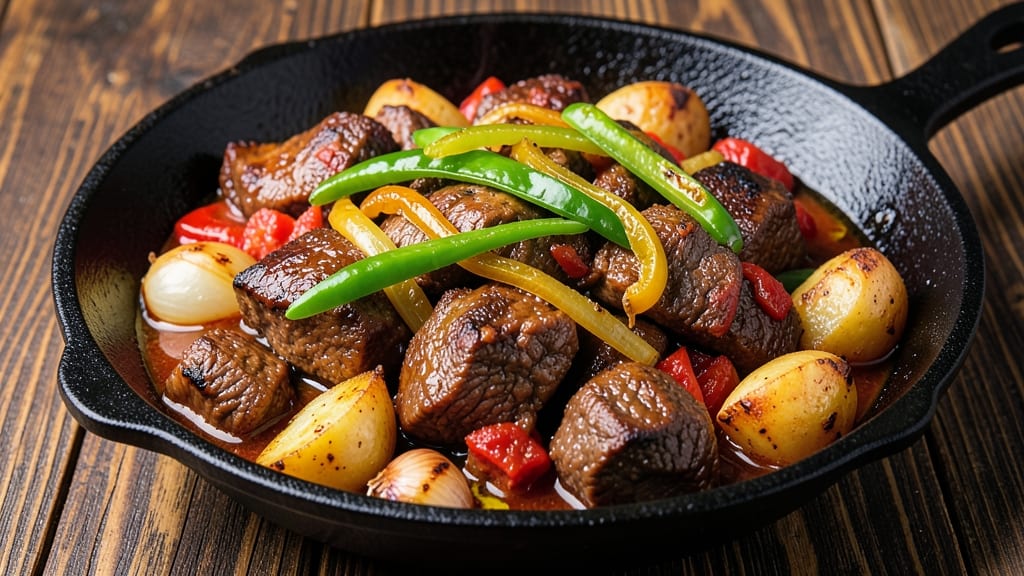
This beef afritada panlasang Pinoy recipe delivers the comforting, tomato-rich flavors of Filipino home cooking in one satisfying dish. The secret lies in slow-braising tender beef with crispy fried eggs nestled atop, creating a harmonious balance of textures and savory depths that taste like home.
I've perfected this version to stay true to tradition while making it approachable for home cooks.
The dish begins with beef seared to golden perfection, then simmered in a rich tomato-based sauce with bell peppers, onions, and potatoes until everything melts into tender harmony.
What sets this apart is the crispy fried eggs on top—each bite delivers that satisfying contrast between the creamy yolk and the rich, slightly sweet sauce below. The technique ensures the eggs stay perfectly crispy while absorbing just enough sauce to make every mouthful decadent.
What you'll end up with is a dish that's equal parts comforting and impressive—a crispy fried egg crowns each serving of braised beef, creating a visual and textural showstopper that's perfect for family dinners or special occasions.
The sauce reduces to just the right consistency, coating every ingredient in its flavorful embrace while maintaining that signature Filipino tang.
Serve this hearty beef afritada over steamed rice to soak up every last drop of that luscious tomato sauce. The combination of textures—tender beef, crispy eggs, and perfectly cooked rice—makes this a complete meal that's both satisfying and full of traditional Filipino soul. Let's bring this classic to your table.
Ingredients for beef afritada panlasang pinoy
Pantry staples meet Filipino soul in this rich, tomato-braised beef with crispy fried eggs on top.
| Ingredient | Amount | Notes |
|---|---|---|
| Beef Chuck Roast 🥩 | 1 ½ lb | Cut into 1-inch cubes |
| Large Russet Potatoes 🥔 | 2 medium | Peeled and quartered |
| Yellow Onions 🧅 | 2 whole | Thinly sliced |
| Green Bell Peppers 🍅 | 2 whole | Sliced into strips |
| Large Tomatoes 🍅 | 4 whole | Crushed by hand |
| Garlic Cloves 🧄 | 6 cloves | Minced |
| Large Eggs 🥚 | 4 whole | For crispy fried eggs |
| Vegetable Oil 🫒 | ½ cup | For frying eggs |
| Tomato Paste 🍅 | 2 tbsp | Or 1 small can |
| Soy Sauce 🥢 | 2 tbsp | Regular or light |
| Calamansi Juice 🍋 | 2 tbsp | Or lime juice substitute |
| Salt 🧂 | 1 ½ tsp | Adjust to taste |
| Black Pepper 🌶️ | 1 tsp | Freshly ground |
| Bay Leaves 🌿 | 2 whole | For infusion |
| White Rice 🍚 | 2 cups | Uncooked, for serving |
The beef is everything here—chuck roast gives you that perfect melt-in-your-mouth texture. Grab the pre-cubed kind from Filipino markets if you can, but any chuck roast works. Look for good marbling, not lean cuts. The potatoes should be firm and starchy—Russets are ideal. If you can't find calamansi, lime juice works in a pinch, though it won't be quite the same. The tomatoes? Ripe but firm ones make the best sauce—no mushy ones here.
No soy sauce? Oyster sauce or Worcestershire sauce adds depth, though soy gives that authentic umami punch. Fresh garlic is non-negotiable—pre-minced from a jar tastes bland. The eggs are the star of the show, so use large eggs at room temperature for that perfect crispy-yolk texture. Want extra richness? Add a splash of coconut milk to the sauce. The bell peppers can be any color—red, yellow, or green—but green holds up best during cooking. If you're short on time, frozen bell peppers work fine.
This dish tastes even better the next day—make extra! Store leftovers in the fridge for up to 5 days, or freeze for 3 months. The sauce thickens as it cools, so add a splash of water when reheating. For serving, steam extra rice—you'll want plenty to soak up that delicious sauce. The crispy eggs are best served immediately, but you can fry them ahead and reheat in a dry skillet for 30 seconds per side.
Why You'll Love This Recipe
- One-Pot Magic: I swear by this recipe for lazy nights—just brown the beef, toss in the potatoes, onions, and peppers, then let the tomatoes and soy sauce work their magic. No extra pans, no fuss, just pure, bubbling satisfaction.
- Tomato-Beef Love: That balance of tangy tomatoes and rich beef? It’s like a hug in a skillet. The chuck roast gets tender enough to melt, while the potatoes soak up all the savory, slightly sweet sauce—no dry bites here.
- Lunchbox Hero: Between us, this is my go-to for meal prep. The flavors only get better the next day, and I pack it in containers all week—my kids fight over who gets the leftovers, and honestly, I don’t blame them.
- Budget Win: A whole chuck roast and a few veggies stretch into four hearty servings, and it’s cheaper than takeout. Plus, the potatoes bulk it up so everyone feels full—no sad, small portions here.
Step-by-step instructions for beef afritada panlasang Pinoy
Here's how to make this rich tomato-based beef stew with perfectly crispy fried eggs on top.
Sear the Beef and Prepare Vegetables
Heat a large Dutch oven over medium-high heat. Add the 1.5 lb beef chuck roast cut into 1-inch cubes and sear until browned on all sides—about 5-6 minutes. This step builds deep flavor through the Maillard reaction. Remove the beef and set aside.
In the same pot, add 0.5 cup vegetable oil and heat until shimmering. Add the 2 whole yellow onions sliced thinly and 2 whole green bell peppers in strips. Cook for 4-5 minutes until softened but not browned. Add the 6 cloves minced garlic and cook for 30 seconds until fragrant. This aromatic base forms the flavor foundation of your afritada.
Build the Tomato Sauce Base
Add the 4 whole large tomatoes crushed by hand to the pot. Stir in the 2 tbsp tomato paste, 2 tbsp soy sauce, and 2 tbsp calamansi juice. Bring to a simmer and cook for 5 minutes to meld the flavors. Season with 1.5 tsp salt and 1 tsp black pepper, then add the 2 whole bay leaves. This combination creates the signature tangy-sweet sauce.
Return the seared beef to the pot and add 2 medium large russet potatoes cut into quarters. Pour in just enough water to barely cover the ingredients—about 1.5 cups. Bring to a gentle boil, then reduce heat to low, cover, and simmer for 45 minutes, stirring occasionally. The potatoes should be tender and the beef fork-tender when done.
Fry the Crispy Eggs
While the beef simmers, heat 0.5 cup vegetable oil in a separate pan over medium heat until hot but not smoking. Crack the 4 whole large eggs into a small bowl, then carefully slide each egg into the hot oil. Fry for 2-3 minutes until the whites are set but yolks remain runny. The key is maintaining consistent heat—too hot and they'll scramble, too cool and they won't crisp.
Transfer the fried eggs to paper towels to drain excess oil. They should be golden around the edges with slightly crispy whites while keeping that perfect runny yolk center. Keep them warm while you finish the stew.
Adjust Seasoning and Serve
Remove the bay leaves from the stew and taste the sauce. Adjust seasoning if needed—add more soy sauce for saltiness or calamansi juice for tang. The sauce should coat the back of a spoon but remain slightly chunky. If it's too thin, simmer uncovered for 5-10 minutes to reduce.
Serve the beef afritada hot over 2 cups cooked white rice, topped with the crispy fried eggs. The contrast of tender beef, rich tomato sauce, and crispy eggs makes this dish truly special. Each bite should deliver perfectly balanced flavors with that satisfying crunch from the eggs.
Pro Tips For Making Beef Afritada Panlasang Pinoy
- SEAR THE BEEF FIRST: After slicing the chuck roast thinly, don’t skip the quick sear in oil—just 2-3 minutes per side until golden. I learned this the hard way: skipping it leaves the beef tough and gray, no matter how long you simmer later. Use enough oil to coat the pan (about 2 tablespoons) and work in batches if needed—crowding steams instead of browns.
- CUT POTATOES UNIFORMLY: Dice those Russets into ½-inch chunks, no bigger, no smaller. I used to eyeball it, and some pieces ended up mushy while others stayed rock-hard. A mandoline makes this faster, but a sharp knife works too—just be consistent. Small, even pieces cook through without falling apart when you stir.
- SOFTEN ONIONS LOW AND SLOW: When sautéing onions with garlic, drop the heat to medium-low after 3 minutes. I used to rush this step, and the onions burned before the garlic had time to bloom. Let them sweat out their moisture for 5-6 minutes until translucent—this builds flavor without turning bitter.
- SAVE THE TOMATO JUICE: After crushing tomatoes by hand, pour the juice into a small bowl first. Strain it through a fine-mesh sieve to remove skins, then use that liquid to deglaze the pot. The extra liquid makes the sauce richer, and skipping the straining leaves gritty texture—trust me, your mouth will notice.
Essential equipment for perfect results
Dutch Oven Essentials
Your Dutch oven is the star of this recipe—it's the only pot that can handle searing beef, simmering potatoes, and keeping everything warm while you fry eggs.
I recommend a 5-6 quart enameled cast iron Dutch oven like the Le Creuset or Lodge—both distribute heat evenly and retain it beautifully. The enameled coating prevents rust and makes cleanup easier.
If you don't have one, a heavy-bottomed stainless steel pot works too, but watch the heat more carefully. 🔥
Frying Pan for Eggs
A non-stick 10-inch skillet is ideal for frying those perfect crispy eggs. I use GreenPan for its ceramic non-stick coating, which handles high heat without releasing toxic fumes. If you don't have non-stick, a well-seasoned cast iron works too—just add a little more oil and keep the heat steady.
Avoid aluminum pans, as they heat too quickly and can scramble the eggs. The key is a medium heat setting, not high!
Measuring Tools
For this recipe, precision matters—especially with the tomato paste, soy sauce, and calamansi juice. A stainless steel measuring spoons set (like OXO's) gives accurate measurements every time. For mincing garlic, a garlic press saves time and ensures even distribution.
Don't skip measuring the 1.5 cups of water for simmering—too much will dilute the sauce, and too little can burn the bottom. A liquid measuring cup with markings makes this easy. 💡
Knives and Cutting Board
A sharp 8-inch chef's knife is a must for this recipe—you'll need to slice onions, dice potatoes, and chop bell peppers efficiently. I swear by Wüsthof's German steel blades for their durability and precision. Pair it with a cutting board (I use Teak for its gentle surface).
For the 1-inch beef cubes, a meat mallet helps tenderize tougher pieces if needed. Prep all veggies before starting to cook—this is mise en place at its finest!
Thermometer for Perfect Eggs
While not strictly necessary, a candy or deep-fry thermometer ensures your egg-frying oil stays at the perfect 325-350°F. This range gives you crispy edges without cooking the yolks too fast.
If you don't have one, test the oil by dropping in a pinch of flour—it should sizzle and bubble gently. For the beef, an instant-read thermometer (like Thermoworks) helps check doneness at 195-203°F for fork-tender results. 🌡️
Optional but Helpful
For extra convenience, a fine-mesh strainer helps drain the fried eggs thoroughly, keeping them crispy. A wooden spoon prevents scratching your Dutch oven while stirring.
If you love the dish, consider a slow cooker for the braising step—just transfer the seared beef and veggies to it and cook on low for 6-8 hours. The flavors develop beautifully this way, though the texture might be slightly softer.
The crispy eggs are still best fried fresh, though!
Nutrition facts
Frequently asked questions
Can I substitute calamansi juice in this recipe?
Yes, you can! If you can't find calamansi, use lime juice as the closest substitute—it provides the necessary acidity. For extra authenticity, add 1/2 teaspoon calamansi zest or a pinch of citric acid to mimic the tangy depth. The sauce will still taste great, though calamansi's unique citrus notes are hard to replicate.
How do I make the sauce thicker or thinner?
For a thicker sauce, simmer the stew uncovered for 5-10 minutes to reduce the liquid. Stir occasionally to prevent burning. If it's too thick, add 1-2 tablespoons of water or beef broth while stirring. The ideal consistency should coat the back of a spoon but remain slightly chunky—not watery, not glue-like.
Can I make beef afritada in a slow cooker?
After searing the beef and sautéing the vegetables, transfer everything to a 6-quart slow cooker. Add the sauce ingredients and 1 cup of water or broth, then cook on low for 6-8 hours or high for 3-4 hours. The slow cooking enhances the flavors, though the texture will be slightly softer. Fry the eggs fresh and add them just before serving.
What's the best way to reheat leftovers?
Reheat gently in a pot over medium-low heat with 1-2 tablespoons of water to prevent drying. Cover and simmer for 5-7 minutes, stirring occasionally. For crispy eggs, fry fresh ones and place them on top when serving. The sauce may thicken when cooled, so add water as needed. Leftovers taste even better the next day!
Can I use ground beef instead of beef chuck roast?
While possible, it's not ideal. Ground beef lacks the rich, tender texture that makes this dish special. If you must use it, brown it well first and simmer for 30-40 minutes instead of 45 minutes. For best results, stick with chuck roast—its marbling and connective tissue create that melt-in-your-mouth experience.