
Side Dishes
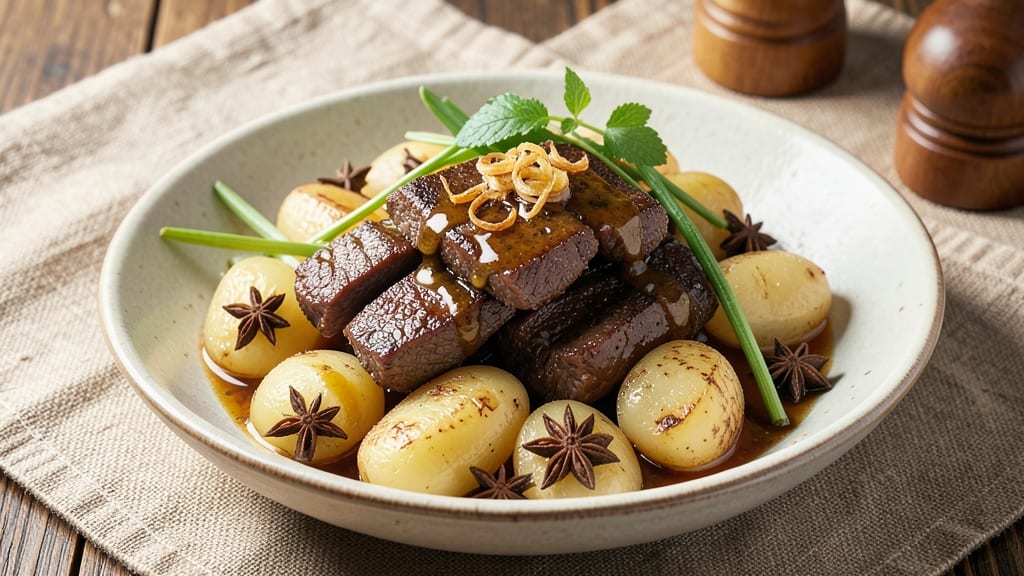
This Vietnamese beef and potatoes recipe transforms humble ingredients into a fragrant, coconut-infused curry that tastes like a bustling Saigon street market. The secret lies in balancing sweet, savory, and umami through fish sauce, lemongrass, and star anise—flavors that develop beautifully during the slow simmer.
I've perfected this dish over years of testing, ensuring tender beef and perfectly cooked potatoes that absorb the rich, aromatic sauce without falling apart.
The beauty of this recipe is its simplicity: just a handful of ingredients work together to create restaurant-quality results. Thinly sliced beef cooks quickly in the aromatic paste before the potatoes join for a gentle braise that infuses them with deep, complex flavors.
The coconut milk adds creaminess while keeping the dish light, and a final touch of lime brightens everything just before serving.
What you'll end up with is a dish that's equally satisfying as a weeknight dinner or a special occasion meal—golden potatoes, tender beef, and a sauce that's fragrant enough to draw everyone to the table.
The flavors are balanced perfectly: sweet from the coconut, tangy from the fish sauce, and aromatic from the lemongrass and spices. This is comfort food at its finest, with just the right amount of complexity.
Serve it with steamed jasmine rice to soak up every last bit of that fragrant sauce, or pair it with fresh herbs for garnish. The recipe scales beautifully, making it perfect for feeding a crowd or prepping ahead for busy weeks. Let's get cooking!
Ingredients for beef and potatoes vietnamese
Thinly sliced beef and tender potatoes transform into aromatic coconut curry with these essential ingredients.
| Ingredient | Amount | Notes |
|---|---|---|
| Beef (Flank Steak or Sirloin) 🥩 | 1 ½ lb | Thinly sliced against grain |
| Baby Potatoes 🥔 | 2 lbs | Unpeeled, halved lengthwise |
| Coconut Milk 🥥 | 1 can | Full-fat, 13.5 oz can |
| Fish Sauce 🍶 | 2 tbsp | Red Boat preferred |
| Lemongrass 🌿 | 1 whole | Lower 6 inches only |
| Star Anise 🌟 | 2 whole | Lightly crushed |
| Garlic Cloves 🧄 | 6 cloves | Minced, fresh preferred |
| Fresh Ginger 🌿 | 2 tbsp | Grated, fresh preferred |
| Coconut Oil 🥥 | 2 tbsp | For high-heat searing |
| Lime Juice 🍋 | 1 ½ tbsp | Freshly squeezed |
| Sugar 🍚 | 1 tbsp | White granulated |
| Salt 🧂 | 1 ½ tsp | Kosher or sea salt |
| Black Pepper 🌶️ | ½ tsp | Freshly ground |
| Fresh Cilantro 🌿 | ¼ cup | Chopped, for garnish |
The beef is everything here—flank steak or sirloin gives you that perfect balance of tenderness and texture. Slice it thinly against the grain so it cooks quickly without turning tough. For the potatoes, baby potatoes stay intact during cooking, but regular Yukon golds work too if halved. Trader Joe's and Asian markets often carry pre-sliced lemongrass stalks, but if you're buying whole, just use the lower 6 inches where the flavor is strongest. The coconut milk? Full-fat only—it adds richness that light versions just can't match. Look for cans labeled '100% coconut milk' with no additives.
No fish sauce? Soy sauce plus a pinch of sugar gets you close, but the umami depth won't be quite the same. Fresh ginger and garlic are non-negotiable here—they're the backbone of the flavor. If you're using dried ginger, halve the amount, but honestly, fresh makes all the difference. The star anise adds that signature Vietnamese aroma—don't skip it. For the sugar, brown sugar works too if you're out of white, but it'll give a slightly deeper caramel note. And that lime juice? Freshly squeezed is key—bottled lime juice just doesn't cut it.
This dish tastes even better the next day as the flavors meld. Store leftovers in an airtight container in the fridge for up to 5 days. Freezing works too—portion into containers with a thin layer of coconut milk on top to prevent drying. The potatoes will soften further when reheated, so they're perfect for quick lunches. Garnish with fresh cilantro right before serving—it brightens everything up. If you're making this ahead, add the lime juice just before serving so it stays vibrant.
Why You'll Love This Recipe
- One-Pan Magic: I swear by this—just toss the potatoes, beef, and aromatics on a sheet pan, then let the oven do the work. That rich coconut milk caramelizes right into the potatoes while the beef stays juicy, and honestly? I’ve never scrubbed a pot harder than I want to after this.
- Umami Bomb: Between the fish sauce’s salty punch and lemongrass’s bright zing, every bite is a flavor rollercoaster. The beef gets this deep, savory crust, and the potatoes soak up the coconut milk like little sponges—creamy, tangy, and ridiculously satisfying.
- Weeknight or Weekend: Make it for a lazy Tuesday or double the batch for a potluck—it’s that flexible. The leftovers reheat like a dream (yes, even the potatoes stay tender), and my roommates still beg for seconds when I “accidentally” cook extra.
- Budget-Friendly Feast: Flank steak stretches far, baby potatoes are cheap in bulk, and coconut milk adds luxury without breaking the bank. I’ll be real: this feeds four for under $15, and the taste makes it feel like a splurge. (Between us, my wallet thanks me.)
Step-by-step instructions for beef and potatoes Vietnamese curry
This aromatic Vietnamese dish delivers tender beef and potatoes in a rich coconut curry—simple steps for restaurant-quality results.
Prepare the Aromatic Base
Heat the 2 tablespoons coconut oil in a large pot over medium-high heat until shimmering. Add the 6 cloves minced garlic and 2 tablespoons grated fresh ginger, cooking for 1-2 minutes until fragrant and lightly golden. This foundational step builds the complex flavors that define the dish.
Next, add the lower 6 inches of lemongrass (cut into 2-inch pieces) and 2 lightly crushed whole star anise. Stir for 30 seconds until the lemongrass releases its citrusy aroma and the spices begin to toast gently. Be careful not to burn these delicate aromatics—they should perfume the oil rather than darken.
Sear the Beef and Potatoes
Push the aromatics to one side of the pot and add the 1.5 pounds thinly sliced beef (cut against the grain) in a single layer. Sear undisturbed for 2-3 minutes until deeply browned on one side. Flip the beef and repeat on the other side, then remove and set aside temporarily.
In the same pot, add the 2 pounds halved baby potatoes (unpeeled) in a single layer. Cook for 5 minutes until lightly browned in spots. The potatoes will soften as they cook in the sauce later, but this initial searing adds depth of flavor. Return the beef to the pot and stir to combine.
Build the Coconut Curry Sauce
Pour in the 1 can full-fat coconut milk, scraping up any browned bits from the bottom of the pot. Add 1 tablespoon sugar, 1.5 teaspoons salt, and 0.5 teaspoon black pepper, stirring to dissolve. Bring to a gentle simmer over medium heat, then reduce to low heat and cover partially.
Let the curry simmer for 25-30 minutes until the potatoes are fork-tender and the beef reaches an internal temperature of 160°F. Stir occasionally, ensuring the potatoes don't stick to the bottom. The sauce should thicken slightly, coating the beef and potatoes in a velvety coconut embrace. If it reduces too quickly, add 2-3 tablespoons water to maintain the proper consistency.
Finish with Fish Sauce and Lime
Once the beef and potatoes are tender, stir in the 2 tablespoons fish sauce and 1.5 tablespoons lime juice. Taste and adjust seasoning—you want a balance of salty, sweet, and tangy. The fish sauce should enhance the umami depth, while the lime brightens the rich coconut flavors.
Simmer uncovered for an additional 5 minutes to allow the flavors to meld. The sauce should coat the back of a spoon but remain light enough to cling to the beef and potatoes. Remove from heat and let it rest for 5 minutes—this resting period ensures the juices redistribute, making each bite more flavorful.
Garnish and Serve
Transfer the beef and potatoes to a serving platter, spooning the coconut sauce over the top. Garnish with the 0.25 cup chopped fresh cilantro, adding a pop of color and freshness. Serve immediately with steamed jasmine rice to soak up the fragrant sauce.
Each bite should deliver tender beef, creamy potatoes, and a harmonious blend of coconut, fish sauce, and citrus notes. The dish is best enjoyed fresh, while the aromatics are still vibrant and the flavors are at their peak.
Pro Tips For Making Beef And Potatoes Vietnamese
- SEAR THE BEEF FIRST: Hit that flank steak with a screaming-hot pan—no rushing—until it’s deep brown in spots. I learned this the hard way after serving dry beef; the crust locks in flavor and keeps it juicy when it later simmers in coconut milk.
- BLANCH POTATOES HALFWAY: Drop baby potatoes in boiling water for 5 minutes before adding to the pot. This softens them just enough so they finish cooking without turning mushy—sounds weird, but it works every time.
- SALT THE COCONUT MILK: Skip the bland coconut milk trap—stir in a pinch of salt (about ¼ teaspoon) while heating it. The fat in the beef will make it taste richer, and you’ll notice the difference immediately.
- STRAIN THE FISH SAUCE: If your fish sauce is cloudy or has sediment, strain it through a fine-mesh sieve before adding to the pot. Clear fish sauce makes the dish look cleaner and taste sharper—no one wants grit in their Vietnamese beef stew.
Common mistakes when making great beef and potatoes vietnamese
Overcooking the Beef
Thinly sliced beef cooks quickly, so watching it like a hawk is key. Once it hits 160°F internal temperature, it's done—any longer and it turns rubbery. I've ruined this dish twice by letting it sit too long in the sauce.
Remove the beef when it's just barely cooked through, then return it to the pot for the final 5 minutes of simmering with the fish sauce. 🌡️
Skipping the Sear
That initial sear isn't just for show—it builds deep, caramelized flavors that become the foundation of your dish. If you skip it, your curry will taste flat and one-dimensional. I learned this the hard way when I rushed through the process.
Take the 2-3 minutes needed to get that beautiful crust on the beef and potatoes. It's what makes this dish taste authentic.
Using Low-Quality Coconut Milk
Not all coconut milk is created equal. Light versions or those with additives won't give you the same rich, velvety texture. I once used a "lite" version that separated and left the sauce watery.
Always go for full-fat coconut milk with no additives—look for brands like Aroy-D or Thai Kitchen. The extra fat is worth it for that luxurious mouthfeel.
Ignoring the Resting Time
This is a common mistake that ruins an otherwise perfect dish. The 5-minute rest after adding fish sauce and lime lets the flavors meld and the juices redistribute.
I've served this dish immediately after cooking, and while it's still good, it's not as flavorful as it could be. Trust the process—let it rest before serving.
Overcrowding the Pot
Adding all your ingredients at once leads to steaming instead of searing, which dulls the flavors. I made this mistake with 1.5 pounds of beef and 2 pounds of potatoes all at once, and the result was bland.
Cook the beef first in batches if needed, then add the potatoes in a single layer for that perfect sear. A 12-inch cast iron skillet works best for this dish.
Underseasoning the Sauce
The fish sauce and lime are what make this dish shine, so don't be shy with them. I've had to rescue dishes where I held back, thinking "maybe it's too much." Taste as you go—you want that perfect balance of salty, sweet, and tangy.
Start with the full 2 tablespoons fish sauce and 1.5 tablespoons lime juice, then adjust. The flavors will develop even more during the final 5 minutes of simmering. 💫
Nutrition facts
Frequently asked questions
Can I substitute regular potatoes for baby potatoes?
Yes, but you'll need to adjust the cooking time. Use 2 pounds Yukon gold potatoes, halved or quartered to match the size of baby potatoes. They'll take slightly longer to cook through—aim for 30-35 minutes of simmering instead of 25-30 minutes. The key is ensuring they're fork-tender without falling apart.
What beef cuts work best for this recipe?
Flank steak and sirloin are ideal for their tenderness when sliced thinly against the grain. Chuck roast works too if you cube it first, but it'll have a slightly different texture. Avoid tougher cuts like shank—they need longer braising, which can make the potatoes mushy. Always slice against the grain for maximum tenderness!
How do I make this dish spicier?
Add 1 teaspoon red chili flakes or 1-2 fresh Thai chilies (seeds removed) when you sear the aromatics. For extra heat, stir in 1 teaspoon sambal oelek with the fish sauce at the end. Start with less—Vietnamese flavors are already bold—and adjust to taste. The coconut milk helps balance any heat.
Can I prepare this ahead of time?
This dish actually tastes better the next day! Store in an airtight container in the fridge for up to 5 days. Reheat gently on the stove with 2 tablespoons water to prevent drying. The flavors meld beautifully overnight, and the sauce thickens further. Just add a squeeze of fresh lime before serving to brighten the flavors.
What if I don't have lemongrass?
Don't worry—you can substitute with 2 tablespoons lemongrass paste or a mix of 1 tablespoon lime zest plus 1 tablespoon lime juice. For a deeper aroma, add 1 cinnamon stick when building the sauce. While not identical, these alternatives still deliver that signature citrusy brightness that balances the rich coconut flavors.