
Soups & Stews
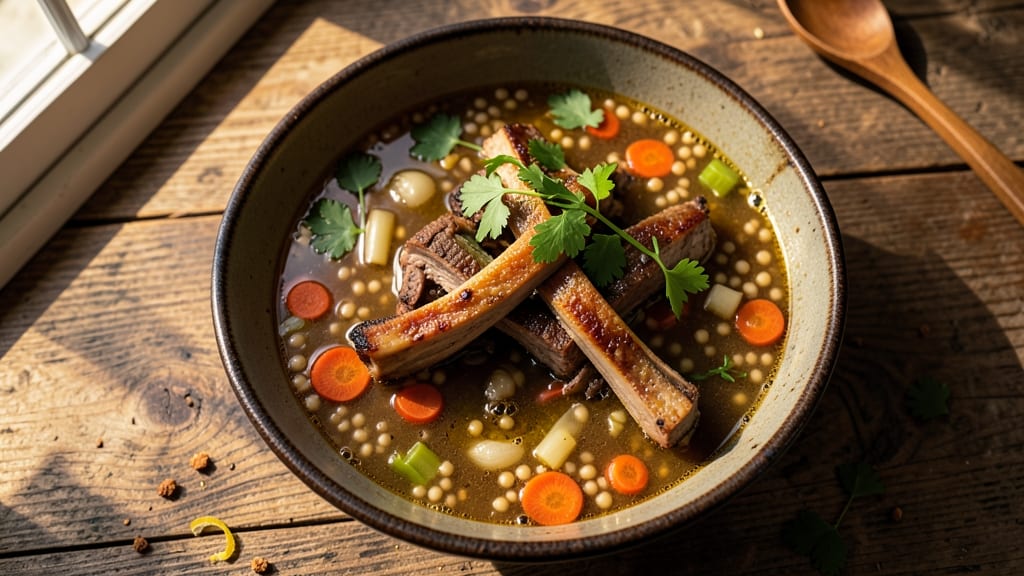
This beef barley soup recipe with prime rib bones transforms humble ingredients into a restaurant-worthy bowl of warmth and depth. The secret lies in slow-cooked prime rib bones, which infuse the broth with unmatched richness and meaty essence that store-bought stock simply can't replicate.
What starts as a simple simmer becomes a symphony of textures and flavors—tender beef, chewy barley, and vegetables that melt into the broth.
The process is straightforward yet rewarding: roast the bones first to deepen their flavor, then simmer them with aromatic vegetables and herbs until the marrow renders into the broth. Barley adds hearty substance, while carrots and onions build sweet, savory layers.
The result is a soup so flavorful it feels like a hug in a bowl—perfect for chilly evenings or when you want to impress without fuss.
What sets this recipe apart is the prime rib bones, which deliver a depth of umami and meaty satisfaction that elevates the soup from ordinary to extraordinary. The broth becomes velvety and robust, while the beef shreds easily, creating a dish that's both comforting and elegant.
Every spoonful carries the essence of slow-cooked perfection, making it a staple for family dinners and special occasions alike.
Serve this soup with crusty bread to soak up every last drop of that rich, meat-infused broth. The combination of tender beef, hearty barley, and aromatic vegetables makes it a complete meal—one that's sure to become a weekly favorite. Let's get started on creating this soul-warming classic.
Ingredients for beef barley soup recipe with prime rib bones
Prime rib bones and simple pantry staples create a soup so rich it feels like a restaurant classic.
| Ingredient | Amount | Notes |
|---|---|---|
| Prime Rib Bones 🦴 | 2 lb | With marrow for rich broth |
| Yellow Onions 🧅 | 2 whole | Chopped into 1-inch pieces |
| Carrots 🥕 | 4 whole | Peeled, cut into 2-inch chunks |
| Celery Stalks 🧅 | 4 whole | Cut into 2-inch pieces |
| Garlic Cloves 🧄 | 6 cloves | Smashed, not minced |
| Pearl Barley 🌾 | 1 ½ cups | Rinsed before cooking |
| Tomato Paste 🍅 | 2 tbsp | High-quality, no sugar added |
| Dried Thyme 🌿 | 1 tbsp | Or 1 tbsp fresh thyme leaves |
| Bay Leaves 🌿 | 2 whole | Removed before serving |
| Black Peppercorns 🌶️ | 1 tsp | Crushed, not ground |
| Salt 🧂 | 2 tsp | Kosher or sea salt |
| Red Wine 🍷 | 1 cup | Dry, like Cabernet Sauvignon |
| Beef Broth 💧 | 4 cups | Homemade or high-quality store-bought |
| Olive Oil 🫒 | ¼ cup | For roasting bones |
The prime rib bones are non-negotiable here—the marrow renders into the broth, creating a depth of flavor that store-bought stock can't match. Look for beef marrow bones at Whole Foods or your local butcher shop. If you can't find them, beef knuckle bones work as a backup. Roast the bones first to deepen their flavor—this step is crucial. For best results, use bones that still have some meat clinging to them, as they'll add extra richness to the broth. If you're buying from a butcher, ask for bones that have been freshly cut—they'll yield the best flavor.
No red wine? Dry sherry or extra beef broth works in a pinch, though wine adds a nice depth. Fresh thyme is ideal, but dried thyme at one-third the amount gets you close. The tomato paste can be skipped if you dislike its intensity, but it adds a subtle sweetness that balances the broth. For the barley, pearl barley is traditional, but pot barley cooks faster. If you can't find either, bulgur wheat is a decent substitute, though the texture will differ slightly. The celery and carrots can be swapped for leeks or fennel if you prefer, but stick with the classic combo for authenticity.
This soup tastes even better the next day as flavors meld. Store in an airtight container in the fridge for up to 5 days or freeze for 3 months. The broth thickens as it cools, so a splash of warm water brings it back to perfection when reheating. For a quick lunch, portion the soup into thermos containers—it stays hot for hours. The barley softens further when reheated, so plan accordingly if you prefer it chewier. Leftovers make great sandwiches with crusty bread or as a base for hearty salads.
Why You'll Love This Recipe
- One-Pot Magic: I swear by this—just toss everything (bones, veggies, broth) into one pot and walk away. The onions caramelize while you chop the celery, and by the time the garlic’s fragrant, the barley’s already soaking up flavor. No extra pans, no stress.
- Rich Without Effort: Those prime rib bones? They melt into the broth like butter, giving you that deep, savory base without hours of simmering. Honestly, the first time I tasted it, I thought, "Wait, this is restaurant-quality?"—and it’s just onions, carrots, and celery doing their thing.
- Leftovers That Beg for More: This soup improves overnight, but even the first batch disappears fast. I’ll be real: my freezer’s packed with containers of it because reheating it is just as good as the original. Perfect for lazy mornings or when you forget to pack lunch.
- Budget-Friendly Luxury: Prime rib bones sound fancy, but they’re the secret to making this soup feel special without breaking the bank. A single pack stretches into multiple meals, and the veggies? Cheap, simple, and always in my pantry. It’s the kind of dish that makes grocery day feel like a win.
Step-by-step instructions for beef barley soup with prime rib bones
Transform humble ingredients into a deeply flavorful soup using this precise method.
Roast the Prime Rib Bones for Maximum Flavor
Preheat your oven to 425°F and position a rack in the center. Place the 2 lb prime rib bones on a baking sheet lined with aluminum foil, marrow-side up. Drizzle them evenly with the 0.25 cup olive oil and rub it into the bones and marrow cavities.
Roast for 30-35 minutes until the bones develop a deep golden-brown color and the marrow begins to soften slightly. This step extracts rich, meaty flavors that will infuse your broth. I like to turn the bones halfway through for even browning—watch for smoke, and if it gets too intense, lower the oven temperature slightly.
Build the Soup Base with Aromatics and Wine
While the bones roast, heat a large Dutch oven over medium heat. Add the 2 whole yellow onions, 4 whole carrots, and 4 whole celery stalks, all chopped as specified. Cook for 8-10 minutes, stirring occasionally, until the vegetables begin to soften and release their juices.
Add the 6 smashed garlic cloves and cook for another 1 minute until fragrant. Pour in the 1 cup red wine and scrape up any browned bits from the bottom of the pot—this is where the flavor lives. Let the wine simmer for 3-4 minutes until it reduces by about half, concentrating its depth.
Combine Roasted Bones with Vegetables and Broth
Transfer the roasted bones to the Dutch oven with the wine mixture. Add the 4 cups beef broth, 2 tbsp tomato paste, 1 tbsp dried thyme, 2 whole bay leaves, 1 tsp crushed black peppercorns, and 2 tsp salt. Stir gently to combine, then bring the mixture to a boil over high heat.
Once boiling, reduce the heat to low and let it simmer uncovered for 1.5 hours. This long simmer time allows the bones to release their collagen and marrow into the broth, creating a rich, velvety texture. Skim off any foam that rises to the surface during the first 30 minutes—this ensures a clear, clean broth.
Add Barley and Simmer to Perfection
After the initial 1.5 hours, remove the bones from the pot and set them aside to cool slightly. Strain the broth through a fine-mesh sieve into a clean pot, pressing gently on the solids to extract as much flavor as possible. Discard the vegetables and aromatics.
Return the strained broth to the pot and add the 1.5 cups rinsed pearl barley. Stir gently and bring the broth back to a simmer over medium heat. Cook uncovered for another 30-40 minutes, stirring occasionally, until the barley is tender but still has a slight bite. The soup should have a thick, hearty consistency—if it's too thin, simmer uncovered for a few more minutes to reduce slightly.
Finish and Serve with Crispy Bone Garnish
Once the barley is tender, taste the broth and adjust the seasoning if needed—you may need to add a bit more salt or pepper to balance the flavors. Return the bones to the pot and let them warm through for 5 minutes. Using tongs, transfer the bones to a cutting board and let them cool for 10 minutes before picking off any remaining meat.
Ladle the soup into bowls and garnish with the crispy bone pieces and any meat you picked off. Serve immediately with crusty bread to soak up every last drop of that rich, meaty broth. The soup will continue to deepen in flavor as it sits, so don't hesitate to reheat leftovers—this dish only gets better over time.
Pro Tips For Making Beef Barley Soup Recipe With Prime Rib Bones
- BLISTER THE BONES: Hit those prime rib bones with a torch or broiler for 3-4 minutes per side before adding liquid. I learned this the hard way—skipping it means flavor that’s more hinted at than exploded across your soup. The charred edges dissolve into the broth, turning it from good to "I’d drive 20 minutes for this."
- SWEAT THE AROMATICS LOW: Cook onions, carrots, and celery in the pot with the bones until they’re just soft—not browned. Medium-low heat for 15-20 minutes, stirring occasionally, keeps them from turning bitter. (Yes, even if you’re impatient like me.) Garlic goes in last—sizzle it for 30 seconds max or it’ll taste like soap.
- SKIP THE BARLEY SOAK: Toss unrinsed barley directly into the simmering broth—it’ll absorb liquid faster and stay chewier. I used to rinse it (old habit from rice), but it just made the soup watery. Aim for a 1:4 barley-to-liquid ratio and stir occasionally to prevent sticking.
- STRAIN THE BROTH SMART: After removing bones, pass the broth through a fine-mesh sieve twice—once to catch big bits, then a second time with a damp paper towel pressed against the sieve. This guarantees a silky texture. (Your future self will thank you when you’re not fishing for celery strings.) Save the strained veggies for a quick stir-fry—they’re still packed with flavor.
Troubleshooting perfect results
Broth Too Thin?
If your soup feels watery after simmering, don’t panic—this is an easy fix. The most common reason is undercooking the barley or using too much liquid. First, check the barley: it should take 30-40 minutes to soften fully.
If it’s still crunchy, simmer uncovered for another 10-15 minutes to let the liquid reduce naturally. For an instant boost, mix 1 tbsp cornstarch with 2 tbsp cold water, stir into the soup, and simmer for 3-5 minutes until thickened.
Pro tip: I’ve found that pot barley thickens broth faster than pearl barley, so swap if needed. 💫
Barley Mushy or Undercooked?
Barley that turns to mush or stays rock-hard usually means timing issues. For pearl barley, aim for 30-40 minutes of simmering—it should be tender but still hold its shape. If it’s mushy, you likely overcooked it. Next time, taste-test a grain early to adjust.
For undercooked barley, simmer uncovered for another 10 minutes, stirring occasionally. A trick I learned from my grandmother: add a pinch of salt to the cooking water—it helps barley firm up slightly. 🌾
Bones Not Yielding Enough Flavor?
The key to rich broth lies in the bones, so if yours aren’t delivering, start with the roasting step. Roast them at 425°F for 30-35 minutes until deeply browned—this caramelizes the marrow and meat.
If your bones are too clean (no meat left), ask your butcher for marrow bones with some clinging meat. Another fix: add 1 tsp fish sauce or ½ cup extra beef broth during simmering to deepen umami.
I’ve also had success adding 1 tbsp soy sauce when combining the bones and broth. 🦴
Vegetables Too Soft or Burnt?
Vegetables that turn to mush or burn are usually overcooked. For onions, carrots, and celery, cook them only until softened but still holding shape—about 8-10 minutes on medium heat. If they burn, reduce the heat slightly and stir more frequently.
For burnt bits, scrape them up (they’re full of flavor!) and add them to the broth. A pro move: Parboil the veggies for 3-4 minutes before adding them to the pot—this ensures they soften evenly without burning. 🥕
Soup Tastes Bland?
Bland soup usually means underseasoning or weak broth. First, taste your broth before adding barley—it should be rich and savory. If it’s flat, boost it with 1 tsp fish sauce, ½ tsp smoked paprika, or a splash of Worcestershire sauce.
For depth, add 1 extra bay leaf or ½ tsp dried sage during simmering. I swear by a final pinch of salt right before serving—it balances flavors perfectly. 🧂
Barley Not Absorbing Broth?
If your barley floats like a raft, it’s not absorbing liquid properly. Rinsing the barley before cooking removes excess starch, which can cause this. For extra insurance, parboil the barley for 2 minutes before adding it to the soup.
Another trick: stir the soup gently but frequently during the last 10 minutes of cooking to encourage even absorption. If it’s still stubborn, simmer uncovered for 5 more minutes to reduce the broth slightly—this helps the barley soak up more liquid. 💡
Nutrition facts
Frequently asked questions
Can I substitute beef knuckle bones for prime rib bones?
Yes, you can use beef knuckle bones as a substitute, though they won't provide quite the same rich marrow flavor. Knuckle bones are denser and release collagen more slowly, which can make your broth slightly thicker but still deeply flavorful. If using them, increase the simmering time to 2 hours to ensure maximum flavor extraction.
How do I know when the barley is perfectly cooked?
Perfectly cooked barley should be tender but still hold its shape—think al dente pasta. For pearl barley, this typically takes 30-40 minutes of simmering. Test by tasting a grain: it should be soft with a slight bite. If it's mushy, you've overcooked it; if it's still crunchy, simmer for another 5-10 minutes.
Can I make this soup in a slow cooker?
The slow cooker method works beautifully for this soup. After roasting the bones, combine everything (except barley) in your slow cooker and cook on low for 6-8 hours or high for 3-4 hours. Strain the broth, then add the barley and cook for an additional 1-2 hours until tender. The slow cooker's gentle heat enhances the broth's depth.
What's the best way to store leftovers?
Store leftovers in an airtight container in the refrigerator for up to 5 days. The flavors actually improve over time! For longer storage, freeze the soup for up to 3 months. When reheating, gently warm on the stove over low heat or in the microwave with a splash of water to restore the broth's consistency.
Why does my broth look cloudy?
Cloudy broth is normal and actually adds body to your soup! The tiny particles from the roasted bones and vegetables create that velvety appearance. If you prefer a clearer broth, strain it through a fine-mesh sieve after simmering. However, the cloudiness is a sign of rich, flavorful collagen that enhances the soup's texture.