
Main Courses
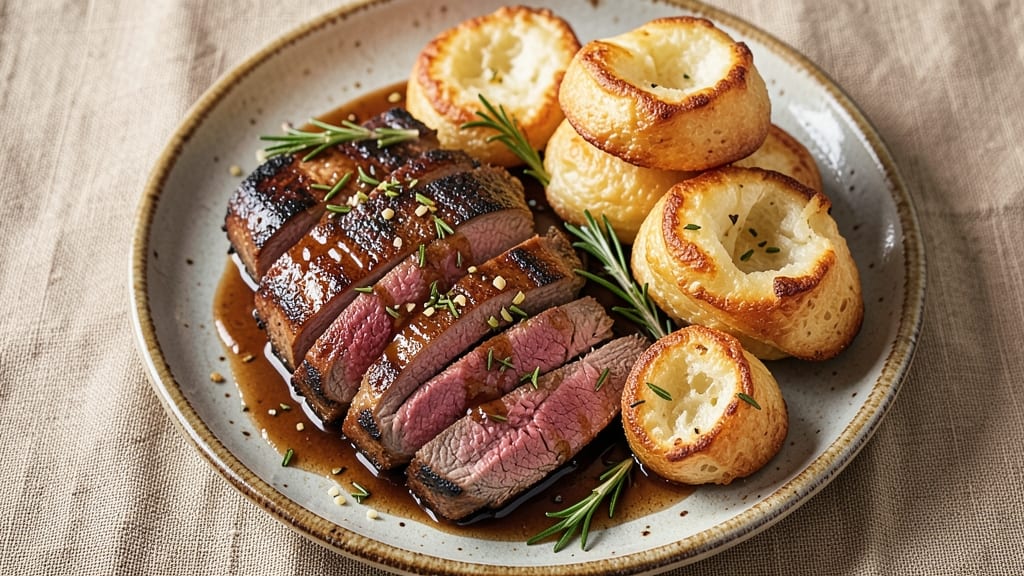
This beef and Yorkshire pudding recipe transforms a simple Sunday dinner into a showstopping centerpiece that smells like home. The secret lies in perfectly roasted beef with a crispy crust and golden Yorkshire pudding that puffs dramatically in the oven—two components that elevate an ordinary meal into something special.
I’ve refined this recipe over years of hosting Sunday roasts, ensuring the beef stays juicy while the pudding achieves that signature crispy top.
The beauty of this dish is its balance between tradition and adaptability. You can roast the beef in the oven for classic results or sear it in a pan for a quicker version, while the Yorkshire pudding batter comes together in minutes with just a few simple ingredients.
The key to success? A hot oven and precise timing—both ensure the pudding rises to golden perfection while the beef develops a rich, caramelized crust.
What you’ll end up with is a crispy-topped Yorkshire pudding that’s light and airy inside, paired with tender, flavorful beef that’s ideal for slicing and serving with gravy. The combination of savory beef and the pudding’s buttery crunch creates a harmony that’s hard to resist.
This is the kind of meal that makes Sunday dinners feel like a celebration, even when it’s just your family around the table.
Serve with classic roasted vegetables, a rich gravy, and perhaps a few extra sides to round out the plate. The leftovers are almost as good as the first bite, making this recipe perfect for meal prep or feeding a crowd. Ready to make your Sunday roast unforgettable? Let’s get started.
Ingredients for beef and yorkshire pudding
Six ingredients transform roast beef into a showstopper with crispy Yorkshire pudding topping.
| Ingredient | Amount | Notes |
|---|---|---|
| Beef Chuck Roast 🥩 | 3 lb | Bone-in preferred for flavor |
| All-Purpose Flour 🌾 | 1 ½ cups | For Yorkshire pudding batter |
| Large Eggs 🥚 | 4 whole | Room temperature for best mixing |
| Unsalted Butter 🧈 | ½ cup | Cold, cubed for Yorkshire pudding |
| Beef Stock 💧 | 1 cup | Homemade or high-quality store-bought |
| Whole Milk 🥛 | ½ cup | Full-fat for best texture |
| Kosher Salt 🧂 | 1 ½ tbsp | Diamond Crystal preferred |
| Black Peppercorns 🌶️ | 1 tsp | Freshly cracked for beef seasoning |
| Garlic Cloves 🧄 | 6 cloves | Minced for beef rub |
| Fresh Rosemary 🌿 | ¼ cup | Chopped, for beef seasoning |
| Fresh Thyme 🌿 | ¼ cup | Chopped, for beef seasoning |
| Olive Oil 🫒 | ¼ cup | For searing beef |
| Vegetable Oil 🫒 | ¼ cup | For Yorkshire pudding batter |
| Fresh Parsley 🌿 | 0.1 cup | Chopped, for garnish |
The beef is the foundation—chuck roast delivers rich flavor and stays tender when cooked low and slow. Costco or local butchers often carry it pre-trimmed, but if buying whole, trim excess fat for a cleaner crust. Fresh herbs like rosemary and thyme make all the difference here; Trader Joe's sells pre-chopped bundles that save time. For the beef stock, homemade is ideal, but Kitchen Basics or Pacific Foods brands are reliable shortcuts. The key to juicy beef? Don’t overcrowd the pan when searing—work in batches if needed.
No chuck roast? Ribeye or sirloin work in a pinch, but they’ll be leaner and less forgiving with timing. Short on fresh herbs? Dried rosemary and thyme at half the amount get you close, though the flavor won’t be as vibrant. The Yorkshire pudding batter relies on cold butter—don’t melt it first, or the batter will turn greasy. For the milk, whole fat is non-negotiable; almond milk or skim won’t give the same tender crumb. If you’re prepping ahead, make the batter up to a day in advance and refrigerate—bring it to room temperature before baking.
Beef leftovers reheat beautifully—slow cook on low with a splash of stock to keep them moist. Yorkshire pudding batter can be stored for 24 hours in the fridge, but don’t let it sit at room temperature longer than 30 minutes. For a crowd, double the batter and bake in two 9-inch pans simultaneously. The pudding freezes well for up to 3 months—thaw overnight in the fridge before reheating. Garnish with fresh parsley just before serving to keep it bright and vibrant.
Why You'll Love This Recipe
- One-Pan Magic: I swear by this—just toss the beef chuck roast in a hot pan, let it brown, then pour in the stock and tuck in those golden yorkshire puddings right on top. No extra dishes, no stress, just hands-off cooking while the flavors meld together.
- Crispy-Creamy Duo: That buttery, puffed yorkshire pudding with its crispy edges and tender center? It’s the star. Pair it with the rich, slow-cooked beef, and you’ve got a balance of textures that’ll have everyone reaching for seconds—no fancy plating required.
- Sunday Roast Vibes: Between us, this feels like a proper Sunday roast without the fuss. Serve it with gravy made from the beef drippings, and suddenly you’ve got a meal that feels special enough for guests but simple enough for a lazy afternoon.
- Budget-Friendly Feast: A chuck roast stretches farther than you’d think, and those yorkshires cost next to nothing to make. Honestly, it’s my go-to for feeding a crowd without breaking the bank—leftovers reheat beautifully, too.
Step-by-step instructions for beef and Yorkshire pudding recipe
This method delivers a perfectly seasoned roast with golden, crisp-topped Yorkshire puddings—ideal for a classic Sunday feast.
Season and Sear the Beef Chuck Roast
Pat the 3 lb beef chuck roast dry with paper towels, removing any excess moisture. This step is crucial for achieving a flavorful crust. In a small bowl, combine the 1.5 tbsp kosher salt, 1 tsp freshly cracked black peppercorns, 6 minced garlic cloves, 0.25 cup chopped fresh rosemary, and 0.25 cup chopped fresh thyme. Rub this mixture evenly over the entire surface of the roast, pressing firmly so the spices adhere.
Heat a large oven-safe skillet over medium-high heat and add 0.25 cup olive oil. Once the oil shimmers, carefully place the seasoned roast in the skillet, fat-side down. Sear for 4-5 minutes until a deep golden-brown crust forms. Flip the roast and sear the other side for another 4-5 minutes. The goal is to develop a rich, caramelized exterior while keeping the interior tender. Transfer the skillet to a 325°F preheated oven.
Prepare the Yorkshire Pudding Batter
While the beef roasts, whisk together the 1.5 cups all-purpose flour, 1.5 tbsp kosher salt, and 4 whole large eggs in a medium bowl until smooth. In a separate small bowl, combine the 0.5 cup whole milk and 0.5 cup unsalted butter, melted and cooled slightly. Gradually pour the milk mixture into the egg and flour mixture, whisking constantly until just combined. The batter should be slightly lumpy—this is normal and ensures light, airy puddings.
Let the batter rest at room temperature for 30 minutes. This resting period allows the gluten to relax, resulting in taller, crispier puddings. Cover the bowl loosely with plastic wrap to prevent a skin from forming. Avoid overmixing or adding extra ingredients, as this can make the puddings dense.
Roast the Beef to Medium Rare
Return the skillet with the seared roast to the 325°F oven and roast for 2-2.5 hours, or until the internal temperature reaches 130°F for medium-rare. Avoid opening the oven door during this time, as the temperature fluctuations can cause the meat to release moisture and steam, resulting in a less flavorful crust. Use a meat thermometer for accuracy—this ensures the beef remains juicy and tender.
About 30 minutes before the beef is done, preheat your oven to 425°F for the Yorkshire puddings. Remove the roast from the oven and let it rest on a cutting board for 15 minutes before carving. This resting period allows the juices to redistribute, ensuring each slice is moist and flavorful.
Bake the Yorkshire Puddings
Pour 0.25 cup vegetable oil into a 12-cup muffin tin, dividing it evenly among the cups. Place the tin in the 425°F oven for 5 minutes to heat the oil. Remove the tin and quickly pour the batter into each cup, filling them about ¾ full. Return the tin to the oven and bake for 20-25 minutes, or until the puddings are puffed, golden-brown, and crisp on top. Avoid opening the oven door during baking, as this can cause the puddings to collapse.
Once baked, remove the puddings from the oven and let them cool for 2 minutes before serving. The puddings should be light, airy, and have a crackly top. If they deflate slightly as they cool, that’s okay—they’ll still be delicious. Garnish with 0.1 cup chopped fresh parsley for a pop of color and freshness.
Slice and Serve
Slice the rested beef chuck roast into ½-inch thick slices against the grain for maximum tenderness. Arrange the slices on a platter and serve alongside the Yorkshire puddings. The contrast of the crispy, golden puddings with the rich, savory beef creates a perfect balance of textures and flavors. Pair with roasted vegetables or a simple green salad to complete the Sunday roast experience.
This method ensures a showstopping centerpiece for any gathering—crispy, golden Yorkshire puddings paired with perfectly cooked, flavorful beef. The key is patience and attention to detail, particularly with the searing and resting steps. Enjoy your meal!
Pro Tips For Making Beef And Yorkshire Pudding
- SEAR THE ROAST FIRST: I learned this the hard way—skipping the sear means flavorless beef. Get that chuck roast screaming hot in a dry pan with oil until it’s deep brown on all sides before adding anything else. The crust locks in juices and builds the foundation for the whole dish.
- WHISK EGGS LIKE A MANIAC: After burning three batches of Yorkshire puddings, I finally figured out: beat those eggs until they’re thick, glossy, and hold a ribbon when you lift the whisk. Cold spots or under-whisked eggs mean dense, sad puddings—no one wants that.
- USE HOT FAT FOR PUDDINGS: This isn’t the prettiest method, but it’s the tastiest. Heat your muffin tin or pudding dish with butter until it’s smoking hot before pouring in the batter. The residual heat ensures rise, not soggy bottoms—yes, even if you’re impatient like me.
- REST THE BEEF UNDER FOIL: Give it a solid 5-10 minutes under foil before slicing, or all that juicy beef will turn into a sad, dry mess on your plate. I skip this when I’m lazy, but the dish is noticeably better when I don’t. Trust the process.
Perfect pairings for these flavors
Classic Gravy Pairing
No Sunday roast is complete without a rich, savory gravy to tie everything together.
After removing the beef from the oven, use the drippings in the skillet to make a red wine gravy—simmer 1 cup beef stock with 2 tbsp flour and ½ cup dry red wine for 5 minutes until thickened.
Strain for a silky texture, then drizzle generously over the beef and Yorkshire puddings. 🍷
Roasted Root Vegetables
Balance the richness of the beef with caramelized root vegetables like carrots, parsnips, and potatoes. Toss 2 lbs mixed roots in 2 tbsp olive oil, 1 tsp thyme, and 1 tsp salt, then roast at 400°F for 45 minutes until tender and golden.
Their natural sweetness complements the savory flavors beautifully.
Crispy Sautéed Greens
For a lighter touch, add sautéed greens like kale or Brussels sprouts. Toss 4 cups chopped greens with 1 tbsp butter, 2 minced garlic cloves, and ½ tsp red pepper flakes for 5-6 minutes until wilted but still vibrant.
The peppery bite cuts through the richness of the beef and pudding.
Cheesy Mashed Potatoes
If you prefer a heartier side, creamy mashed potatoes elevate the meal. Boil 2 lbs Yukon Gold potatoes until tender, then mash with 4 tbsp butter, ½ cup sour cream, and ½ cup sharp cheddar cheese.
The velvety texture contrasts perfectly with the crispy pudding and tender beef. 🧀
Fresh Garden Salad
A bright, crisp salad balances the richness of the main dish. Toss 4 cups mixed greens with ½ cup cherry tomatoes, ¼ cup crumbled feta, and a dressing of 2 tbsp olive oil, 1 tbsp balsamic vinegar, and 1 tsp Dijon mustard.
The acidity and crunch make every bite refreshing.
Dessert Pairing: Sticky Toffee Pudding
Save room for a warm sticky toffee pudding with vanilla ice cream. The caramelized dates and buttery sponge mirror the flavors of the Yorkshire pudding while offering a sweet finish. Serve with a scoop of vanilla bean ice cream for the ultimate comfort-food experience. 🍮
Nutrition facts
Frequently asked questions
Can I make Yorkshire puddings without a muffin tin?
Use a cast-iron skillet instead—heat 2 tbsp vegetable oil until smoking hot, then pour batter into small circles with a spoon. Cover and bake at 425°F for 10-12 minutes. For individual portions, try ramekins or even a small baking dish with a spoon. The key is the hot oil—it creates that signature crispy top!
How do I keep the Yorkshire puddings from collapsing?
Never open the oven door during the first 15 minutes of baking—temperature drops cause them to deflate. Also, ensure your oven is properly preheated to 425°F and the oil is smoking hot before adding batter. If they do collapse slightly, they'll still taste great—just reheat briefly in the oven to restore crispiness.
What's the best way to reheat leftover Yorkshire puddings?
Wrap them individually in foil and reheat at 350°F for 5-7 minutes until crispy again. For extra crunch, broil for 1-2 minutes at the end. Avoid microwaving—they'll turn soggy. Store in an airtight container for up to 2 days or freeze for 3 months.
Can I substitute chuck roast with another cut?
Yes! For a quicker version, use ribeye or sirloin steaks (sear 3-4 minutes per side). For a budget option, try chuck shoulder (longer cooking time needed). Avoid lean cuts like filet mignon—they won't develop enough flavor. The key is fat content for juiciness and crust formation.
Why did my Yorkshire puddings turn out dense?
Overmixing the batter or using warm ingredients (like melted butter) prevents proper rising. Keep everything cold until ready to bake, and whisk just until combined. Also, ensure your oven is hot enough—425°F is non-negotiable for that signature puff. If the batter was too thin, reduce milk slightly next time.