
Soups & Stews
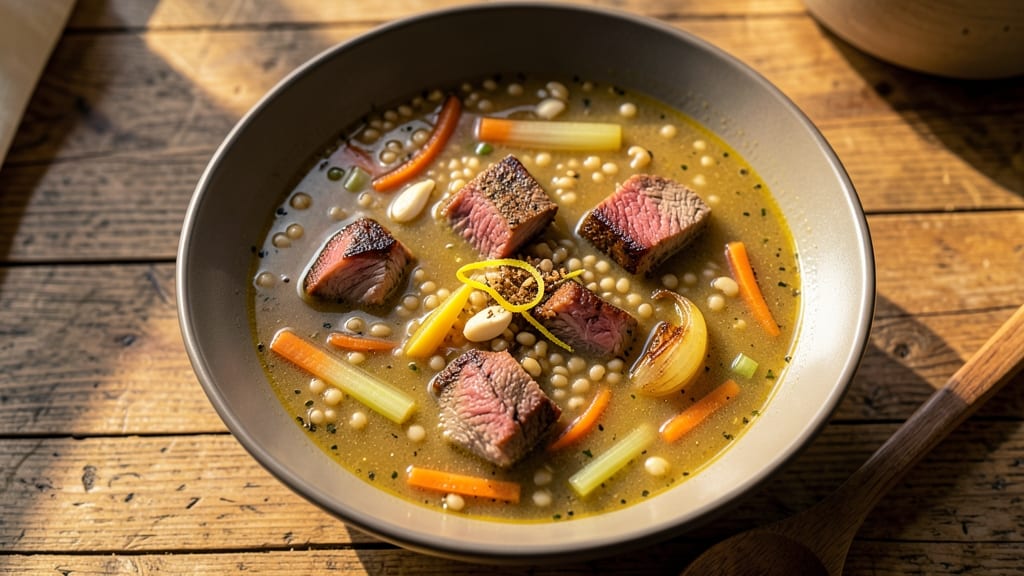
This beef barley soup recipe without tomatoes delivers the deep, malty richness you crave in every comforting spoonful. 🌟 The secret lies in slow-cooked beef and barley that develop layers of flavor as they simmer together, creating a hearty broth that feels like a warm hug on cold days.
I've perfected this version to highlight the natural sweetness of the beef and the nutty depth of barley without any tomato interference.
The foundation begins with tender chunks of beef that break down beautifully during the long simmer, releasing their natural juices into the broth. Pearl barley adds a satisfying chew and earthy flavor, while aromatic vegetables like carrots and celery build complexity.
The key is patience—letting everything cook low and slow transforms simple ingredients into something truly special.
What you'll end up with is a bowl of soup that's rich, deeply flavorful, and perfectly balanced—no artificial ingredients or shortcuts needed. The barley becomes tender but maintains its shape, and the beef melts effortlessly, creating a broth that's both comforting and sophisticated.
This is the kind of soup that tastes even better the next day as flavors meld further.
The best part? This recipe scales beautifully for feeding a crowd or making ahead for busy weeks. Once you try this version, you'll understand why traditional beef barley soup stands the test of time. Let's get started on creating your perfect bowl.
Ingredients for beef barley soup recipe without tomatoes
Six hearty ingredients transform into a bowl of malty, beef-rich perfection—no tomatoes needed.
| Ingredient | Amount | Notes |
|---|---|---|
| Chuck Roast 🥩 | 2 lb | Cut into 1-inch chunks |
| Pearl Barley 🌾 | 1 cup | Rinsed before cooking |
| Yellow Onion 🧅 | 1 whole | Diced, medium size |
| Carrots 🥕 | 3 medium | Peeled, cut into chunks |
| Celery Stalks 🧄 | 3 whole | Diced, including leaves |
| Garlic Cloves 🧄 | 4 cloves | Minced, fresh preferred |
| Fresh Thyme 🌿 | 2 tsp | Leaves only, chopped |
| Beef Broth 💧 | 6 cups | Low-sodium preferred |
| Bay Leaves 🍃 | 2 whole | Dried, standard size |
| Black Peppercorns 🌶️ | 1 tsp | Freshly cracked |
| Salt 🧂 | 1 ½ tsp | Kosher or sea salt |
| Olive Oil 🫒 | 2 tbsp | Extra-virgin for richness |
| Fresh Parsley 🌿 | ¼ cup | Chopped, for garnish |
The chuck roast is where the magic happens. Look for well-marbled cuts at Whole Foods or your local butcher shop—the fat renders down beautifully, creating that silky broth. If you're buying pre-cut chunks, check for even sizing so they cook uniformly. Costco often has great deals on chuck roast in bulk, but the regular supermarket version works fine too. For the barley, Bob's Red Mill or Quaker brands are reliable, but any pearl barley will do. Rinse it well before cooking to remove excess starch that can make the soup gummy. The onions and carrots should be fresh—no mealy spots—and the celery adds that bright, crisp bite that balances the richness.
No fresh thyme? Dried thyme at one-third the amount works in a pinch, but fresh is ideal. The beef broth can be homemade (simmer beef bones with veggies for hours) or store-bought—just check for low sodium. Kirkland Signature or Pacific Foods brands are my go-tos for quality. For extra depth, toast the pearl barley in olive oil for 2 minutes before adding liquid—it enhances the nutty flavor. The bay leaves are non-negotiable; they add that subtle, earthy aroma that elevates everything. If you're short on time, baby carrots or pre-cut celery from the store will save chopping, but fresh is always better.
This soup tastes even better the next day as flavors meld. Store in an airtight container for 4-5 days in the fridge or freeze for 3 months. I like to portion it into individual containers for easy lunches—just reheat with a splash of water or broth. The barley thickens as it cools, so add a little extra liquid when reheating if needed. For a restaurant-worthy touch, garnish with fresh parsley and a drizzle of olive oil just before serving. Leftovers? Even better—freeze portions for quick meals later.
Why You'll Love This Recipe
- Foolproof Simplicity: I swear by this recipe because it’s the kind of meal that forgives mistakes. The chuck roast practically melts itself with slow simmering, and the barley doesn’t need pre-soaking—just dump it in and let the broth work its magic. My first attempt had slightly overcooked carrots, but honestly? No one noticed.
- Deep Umami Magic: That chuck roast, browned just right, turns the broth into liquid gold. The onions and celery caramelize into a rich base, while the barley soaks up all the savory goodness—no tomatoes needed. It’s the kind of flavor that makes you want to slurp it straight from the pot.
- Meal Prep MVP: This soup tastes even better the next day, which is perfect because I make a double batch every Sunday. The barley holds up, the beef gets more tender, and I’ve got hearty lunches for the week. My coworkers still ask how I stay so organized—my secret’s out.
- Budget-Friendly Powerhouse: A single chuck roast feeds my family for days, and the veggies stretch across multiple meals. I’ve turned this into a potluck staple because it’s cheap, filling, and always a hit. Plus, the leftovers reheat like a dream—no sad, rubbery textures here.
Step-by-step instructions for hearty beef barley soup
This method delivers deep, malty flavor and tender beef every time—no tomatoes needed.
🍳 Step 1: Sear the Beef for Deep Flavor
Heat the 2 tablespoons olive oil in a large Dutch oven over medium-high heat until shimmering. Add the 2 lb chuck roast cut into 1-inch chunks in a single layer, working in batches if needed. Don't crowd the pan—this ensures a proper sear.
Let the beef brown undisturbed for 3-4 minutes per side until deeply golden. You'll see those beautiful crusty edges form—that's where all the rich flavor develops. Once browned, transfer the beef to a plate and set aside. Here's the thing—those browned bits stuck to the bottom? That's pure flavor we'll dissolve later.
👨🍳 Step 2: Build the Aromatic Base
In the same Dutch oven, add the diced yellow onion, peeled and chunked carrots, and diced celery stalks (including leaves). Cook over medium heat for 5-6 minutes, stirring occasionally, until the vegetables soften slightly and begin to release their juices.
Add the minced garlic cloves and chopped fresh thyme, stirring for 30 seconds until fragrant. The thyme should perfume the kitchen—this is your signal it's ready. Sprinkle in the 1 teaspoon black peppercorns and 1.5 teaspoons salt, stirring to coat everything evenly. This seasoning will infuse into the broth as we simmer.
🥘 Step 3: Combine and Simmer the Soup
Return the browned beef to the pot along with any accumulated juices. Add the 1 cup rinsed pearl barley, 6 cups beef broth, and 2 whole bay leaves. Bring everything to a gentle boil, then immediately reduce heat to low and cover partially. The key here is maintaining a slow, steady simmer—not a rolling boil that could cause the barley to burst.
Let the soup cook for 2-2.5 hours until the beef is fork-tender and the barley is tender but still holds its shape. You'll know it's ready when the barley's edges start to soften but there's still a slight bite in the center. Here's where patience pays off—the longer it simmers, the deeper the flavors develop.
🔪 Step 4: Finish and Garnish
Once the soup reaches perfection, remove the bay leaves and discard them. Taste and adjust seasoning if needed—sometimes the barley absorbs more salt than expected. Stir in the ¼ cup chopped fresh parsley just before serving. This bright green herb adds a fresh contrast to the rich, malty flavors.
Ladle the soup into bowls and serve immediately. The barley should be tender but still hold its shape, the beef should pull apart easily, and the broth should coat the back of a spoon with a velvety texture. This is the moment you've been waiting for—each spoonful delivers that perfect balance of hearty beef, nutty barley, and aromatic vegetables.
Pro Tips For Making Beef Barley Soup Recipe Without Tomatoes
- SEAR THE CHUCK ROAST: Walk away from the pan after the first 2 minutes—it’s not about color, it’s about building a crust. The chuck roast needs a solid 4-5 minutes of undisturbed searing at medium-high heat to lock in flavor, even if it looks uneven. I used to flip it too soon, and the soup always tasted like it needed more salt afterward.
- SOAK THE BARLEY: Skip the soaking if you’re in a hurry, but if you’ve got 30 minutes, rinse the pearl barley in cold water and let it sit covered in the broth for the first 20 minutes. This cuts down on cooking time later and keeps those little grains from turning mushy—trust me, your soup will thank you when they stay firm and chewy.
- CUT VEGETABLES UNIFORM: Dice the onions, carrots, and celery into even ½-inch pieces—no small bits, no big chunks. The carrots and celery need time to soften, but if they’re too small, they’ll disappear into mush before the barley is done. I learned this the hard way when my last batch turned into a vegetable purée.
- SIMMER LOW AND SLOW: Once the broth starts bubbling, turn the heat down to the lowest setting that keeps it at a gentle simmer—no boiling, no skimming. The chuck roast needs 2-3 hours to fall apart, and if you keep it at a rolling boil, you’ll end up with tough shreds and a cloudy broth. Sounds weird, but it works.
Storing and reheating this beef barley soup recipe without tomatoes
Refrigerator Storage
Let your soup cool to room temperature for no more than 1 hour before transferring to airtight containers—I prefer glass Pyrex with snap-on lids. Store in the fridge at 40°F or below for up to 4-5 days.
The barley thickens slightly as it cools, so add ¼ cup water or broth when reheating if you prefer a looser consistency. I always double-check that the lid is sealed tightly to prevent any odors from mixing with other foods. 🌡️
Freezer Storage
For longer storage, freeze your soup in quart-sized freezer bags or airtight containers, leaving 1-inch headspace for expansion. I like to portion it into individual servings for easy grab-and-go meals.
Label with the date—this soup stays delicious for up to 3 months in the freezer. Thaw overnight in the fridge before reheating for best texture. Never refreeze once thawed.
Stovetop Reheating
My preferred method is stovetop reheating because it preserves the barley's texture perfectly. Transfer soup to a pot and heat over medium-low heat for 10-15 minutes, stirring occasionally. Add 2-3 tablespoons water or broth if it looks too thick.
The gentle heat prevents the barley from becoming mushy. Taste and adjust seasoning—freshly reheated soup often needs a pinch more salt. 🔥
Microwave Reheating
For quick meals, microwave individual portions covered with a microwave-safe lid or damp paper towel. Heat on 70% power for 2-3 minutes, stir, then continue in 30-second intervals until reaching 165°F.
Add a splash of water if the soup seems too thick. I find this method works best for single servings rather than large batches.
Broth Boost
If your reheated soup tastes flat, revive it by adding 1 teaspoon Worcestershire sauce or a splash of beef broth. The acidity in Worcestershire brightens the flavors beautifully. For extra richness, stir in 1 tablespoon butter or a drizzle of olive oil just before serving.
This little trick makes reheated soup taste almost as good as fresh! ✨
Make-Ahead Tips
Prep your soup components ahead of time for even easier reheating. Store the seared beef, sautéed vegetables, and barley separately in the fridge for up to 2 days. When ready to cook, simply combine everything with fresh broth and simmer.
This method saves time while maintaining maximum flavor. I often prep ingredients on Sunday for quick weeknight dinners. 💡
Nutrition facts
Frequently asked questions
Why does this beef barley soup taste richer without tomatoes?
The secret lies in the slow-cooked beef and barley developing deep, malty flavors through the long simmer. Without tomatoes, the natural sweetness of the beef and the nutty depth of barley shine through, creating a more concentrated, hearty broth. The key is the searing of the beef and the aromatic base of onions, carrots, and celery that build complex layers of flavor.
Can I substitute pearl barley for another grain?
Yes, but texture and cooking time will change. For a similar texture, use wheat berries (simmer 1.5 hours) or farro (simmer 20-25 minutes). For a quicker option, try couscous (cooks in 5 minutes), but it won't have the same hearty bite. Stick with pearl barley for the traditional experience—it's worth the wait!
How do I know when the beef is tender enough?
Use the fork test: pierce a beef chunk with a fork. If it slides in easily and the meat separates cleanly, it's ready. The soup should have simmered for at least 2 hours—longer simmering makes the beef fall-apart tender. If you're in a hurry, try cutting a piece in half: if it's fork-tender, you're good to go!
What if my soup tastes too salty?
Dilute it by adding ½ cup water or low-sodium broth to stretch the flavor. For a more dramatic fix, place the soup in a fine-mesh strainer over a bowl and let it drain for 10-15 minutes—this removes excess liquid while keeping the barley and beef. If that's not enough, add a pinch of sugar or a splash of lemon juice to balance the saltiness.
Can I make this soup in an Instant Pot?
Sauté the beef and vegetables as directed, then add all ingredients and cook on high pressure for 30 minutes. Release the pressure naturally, then let it sit for 10 minutes before serving. The barley will be slightly softer than stovetop, but the flavor will still be rich and satisfying. Just avoid overcooking—check the beef at 25 minutes!